Siffredus of Carpentras is a saint of the Catholic Church. Siffredus of Carpentras's feast day is celebrated on 27 November. Siffredus of Carpentras is the patron saint of Carpentras.
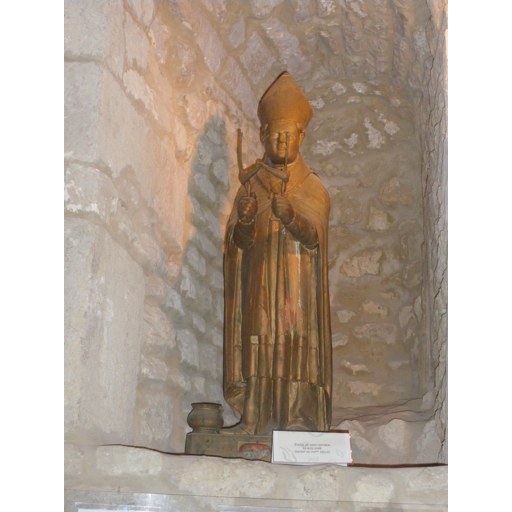
Véronique PAGNIER
License: Public domain
Siffredus of Carpentras
Saint- Feast Day
- 27 November
- Gender
- male
- Church
- Catholic
Places
Roles & Family
Patronage
Carpentras
Biography
Siffredus of Carpentras, known in French as Saint Siffrein and also appearing in sources as Siffred, Syffredus, or Syffroy, was a bishop associated with the church of Carpentras in Provence, in what is now the department of Vaucluse in southeastern France. He is venerated as a saint in the Roman Catholic Church and is the patron of Carpentras. The period of his life is generally placed in the sixth century, but no contemporary chronicle, conciliar subscription, or royal document can be shown to fix his dates with certainty. Almost everything that later ages related about his origin and career comes from a medieval vita written centuries after the time in which he is supposed to have lived. For that reason the secure historical facts are few: a local holy bishop remembered at Carpentras, a feast on 27 November, and a cathedral and relics that carried his name through the Middle Ages.
According to that later legendary life, Siffredus was born at Albano in Italy and became a monk at Lérins Abbey, the island monastery off the Provençal coast that in late antiquity and the early Middle Ages supplied many bishops to the churches of Gaul. From Lérins he is said to have been raised to the episcopate. In the early medieval period the diocese later called Carpentras had its seat at Venasque (ancient Vindasca), a fortified site in the same region; Carpentras itself became the principal episcopal city only in subsequent centuries. Tradition therefore sometimes describes him as bishop of Venasque as well as of Carpentras. None of these details—Italian birth, the Lérins novitiate, or the exact title of his see—can be confirmed from independent sixth-century evidence, and they should be read as the pious reconstruction of a later age rather than as documented biography.
Devotion to Siffredus became firmly centered on Carpentras. The city’s cathedral, Cathédrale Saint-Siffrein, is dedicated to him and has long claimed to possess his relics; it remains the principal monument of his cult. He is regarded as the patron saint of Carpentras. His feast is kept on 27 November. The cult was essentially local for much of the Middle Ages, maintained in the liturgical calendars and churches of the Comtat and surrounding Provence. Miracle stories and other hagiographical embellishments attached to his relics follow the common pattern of medieval saint’s lives and do not rest on independently verifiable historical testimony. No authentic writings by Siffredus survive.
Beyond these traditional outlines, little can be said with confidence. He does not figure prominently in the sixth-century conciliar acts or Frankish records that name other Provençal bishops, and modern historians therefore treat him as an obscure local holy bishop whose memory was preserved and elaborated by the church of Carpentras. The persistence of the dedication, the relics, the patronage of the city, and the annual feast on 27 November are the principal historically secure facts of his afterlife as a saint. Precise years of birth and death, a documented family, and a formally attested religious order are not established by reliable contemporary sources.