Silvester Olshevsky is a saint of the Eastern Orthodox Church (1860 - 1920). Silvester Olshevsky's feast day is celebrated on 13 February.
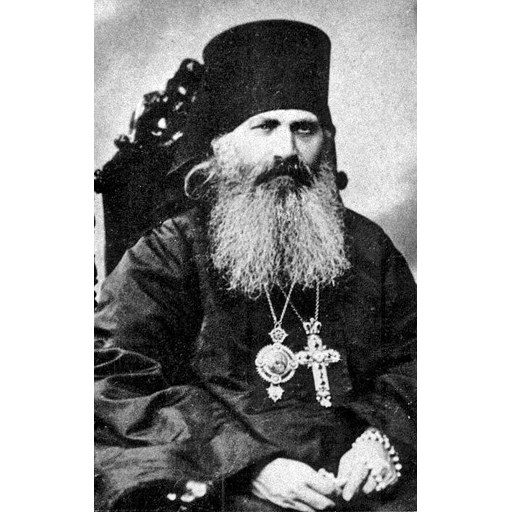
Unknown authorUnknown author
License: Public domain
Silvester Olshevsky
Saint- Life Span
- 1860 - 1920 (age 60)
- Feast Day
- 13 February
- Gender
- male
- Church
- Eastern Orthodox
Places
Roles & Family
Canonization
Biography
Silvester Olshevsky (monastic name Silvester; secular name Stepan Aleksandrovich Olshevsky) was a bishop of the Russian Orthodox Church and Archbishop of Omsk and Pavlodar, later glorified as a hieromartyr. He was born in 1860 in the village of Kosovka in the Skvira district of the Kiev Governorate of the Russian Empire, in the family of a church reader. He received a full clerical education at the Kiev Theological Seminary and the Kiev Theological Academy, completing the academy in the late 1880s with the degree of candidate of theology. He then taught at the Ekaterinoslav Theological Seminary. In 1889 he was ordained to the priesthood and served in parish and teaching work in the Ekaterinoslav region. Like other members of the married parish clergy of the Russian Church, he was a married priest during this period. After being widowed he received monastic tonsure in 1910, was raised to the rank of archimandrite, and in November of that year was consecrated Bishop of Chelyabinsk, a vicar of the Orenburg diocese.
In the years that followed he was moved among vicariate sees of the imperial church, including service as Bishop of Priazov and Taganrog under the Ekaterinoslav diocese, before being appointed Bishop of Omsk and Pavlodar in 1915. He was elevated to archbishop in 1918. The Omsk diocese covered a vast Siberian territory. His episcopate there coincided with the First World War, the revolutions of 1917, and the Russian Civil War. Omsk became the principal seat of the anti-Bolshevik government of Admiral Aleksandr Kolchak. Church sources describe Silvester as remaining in the city and continuing archpastoral work among clergy and laity amid political collapse, refugee movements, and violence, rather than withdrawing with the retreating White authorities.
After the Red Army took Omsk in November 1919, Soviet security organs moved against remaining church leaders. In early 1920 Archbishop Silvester was arrested by the Cheka. He died in Omsk on 26 February 1920 while in custody. Later ecclesiastical notices state that he was tortured and killed by the Bolshevik secret police; the precise medical cause of death and the disposal of his body are not established from surviving official records, and his burial place is unknown.
The Russian Orthodox Church glorified him as a hieromartyr at the Jubilee Bishops’ Council of 2000, among the New Martyrs and Confessors of Russia. He is commemorated on 13 February according to the Julian calendar used by that church, and also in the Synaxis of the New Martyrs and Confessors of the Russian Church and among the saints of Siberia. What is known of him comes mainly from diocesan and episcopal directories, the standard catalogs of Russian bishops, and subsequent hagiographical summaries; many particulars of his family life, inner spiritual life, and last weeks of imprisonment remain sparsely documented.