Solomon I of Imereti is a saint of the Catholic Church (1735 - 1784).
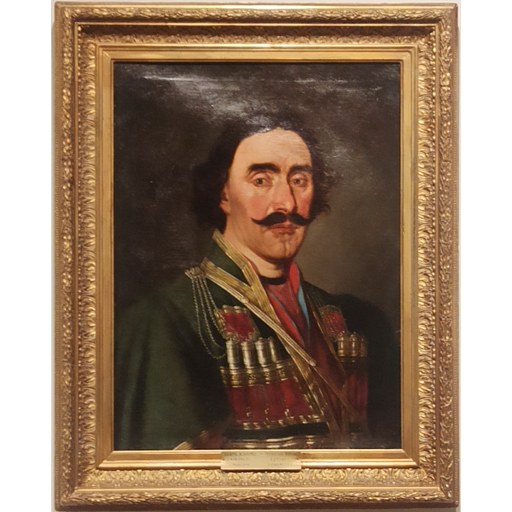
Surprizi
License: CC0
Solomon I of Imereti
Saint- Life Span
- 1735 - 1784 (age 49)
- Gender
- male
- Church
- Catholic
Places
Roles & Family
Religious Information
Biography
Solomon I of Imereti belonged to the Bagrationi dynasty that had ruled various Georgian crowns since the Middle Ages. He was born in 1735, the son of King Alexander V of Imereti and of Tamar Abashidze, a member of one of the leading noble families of western Georgia. The kingdom he would inherit was only a fragment of the united Georgian monarchy that had broken up in the fifteenth century. By the eighteenth century Imereti was a small Christian realm in the Caucasus, its kings often little more than first among rival princes, and its coast and southern districts exposed to the Ottoman Empire. Slave-raiding and the export of captives through Ottoman ports had become a grim feature of the regional economy. Solomon came to the throne in 1752 after the death of his father and faced these problems while still a young man.
His first years as king were devoted to rebuilding royal power. He fought refractory nobles and sought to stop the sale of Georgians into Ottoman slavery, a policy that put him at odds with both the Porte and those Imeretian and Mingrelian lords who profited from the trade. In 1757 an Ottoman army advancing from the Childir (Akhaltsikhe) pashalik was met at Khresili. Solomon’s victory there, won with the support of loyal Imeretian forces and some neighboring Georgian contingents, checked an immediate invasion and became the best-known military episode of his reign. He followed it with further attempts to police the slave routes and to assert the crown over the highlands and the Rioni valley. The Georgian Orthodox Church, whose monasteries and bishoprics had suffered from disorder, generally favored his program of stronger kingship.
Those same measures made enemies. In 1766 a coalition of nobles, aided by the Ottomans, drove Solomon from power and proclaimed his cousin Teimuraz king. Solomon took refuge outside Imereti and appealed to Russia, which under Empress Catherine II was already receiving eastern Georgian envoys and looking toward the Black Sea. When war between Russia and the Ottoman Empire broke out in 1768, Russian troops and Solomon’s remaining supporters enabled him to recover the throne. He thereafter tried to act as a Russian ally in the western Caucasus, while King Heraclius II pursued a parallel policy in Kartli-Kakheti. The peace of Küçük Kaynarca in 1774 required the Ottomans to abandon claims to tribute from Imereti, but the treaty was poorly enforced on the ground. Ottoman forts such as Poti still menaced the coast, and the Dadiani princes of Mingrelia continued to conduct their own diplomacy.
Solomon spent the last decade of his life in a familiar pattern of local wars, reconciliations, and appeals to St. Petersburg. He never fully subdued Mingrelia or Guria, nor did he obtain a permanent Russian garrison on terms that would have guaranteed Imeretian independence. Dynastic misfortune compounded political difficulty: his son Alexander died before him, leaving the succession open to cousins. Solomon I died in 1784, after a reign that had lasted, with the interruption of 1766–1768, for some three decades. He was buried at Gelati Monastery, the traditional necropolis of the Imeretian Bagrationis near Kutaisi.
Later Georgian historians have judged him as one of the more energetic later kings of Imereti, a ruler who understood that the slave trade and noble particularism were destroying the kingdom, and who turned to Russia as the only available Christian great power. His restoration in 1768 also marked a step toward the Russian protectorate that would, under his kinsman Solomon II, end in the annexation of Imereti in the early nineteenth century. He was not a cleric or a canonized saint; his memory is political and national rather than liturgical. The record of his marriages and children is that of a secular Bagrationi king: he took wives from the western Georgian princely houses, including the Shervashidze and Dadiani, and left descendants, though the crown itself passed laterally after his death.