Sossius is a saint of the Catholic Church (d. 305). Sossius's feast day is celebrated on 23 September. Sossius is the patron saint of Frattamaggiore;San Sossio Baronia.
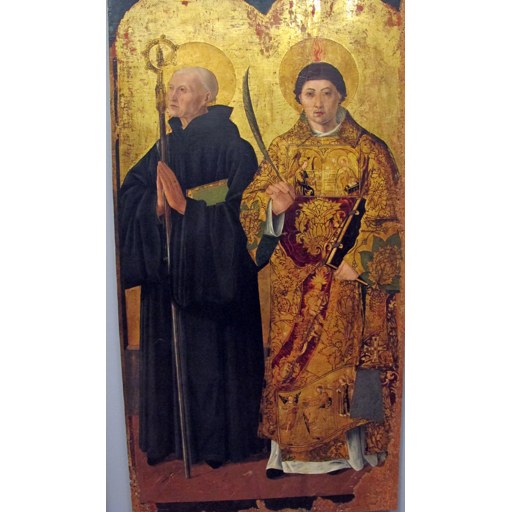
Sailko
License: CC BY-SA 3.0
Sossius
Saint- Life Span
- d. 305
- Feast Day
- 23 September
- Gender
- male
- Church
- Catholic
Places
Sacred Place

Roles & Family
Patronage
Frattamaggiore;San Sossio Baronia
Biography
Saint Sossius, also known as Sosius, Sossio, or Sosso, was a Christian deacon of the church of Misenum, a Roman naval port on the northwestern shore of the Bay of Naples in Campania. He lived in the late third and early fourth centuries and is remembered as a companion and close friend of Saint Januarius (San Gennaro), bishop of Benevento. Almost nothing about his family, education, or early career can be verified from contemporary records. The principal narrative of his life and death comes from later hagiographical texts, especially the Acts associated with Saint Januarius, which were written centuries after the events they recount. Those traditions portray Sossius as a young cleric of outstanding holiness whose reputation led Januarius to visit him at Misenum during the Great Persecution initiated under the emperors Diocletian and Maximian.
According to this received account, Sossius was arrested by Campanian authorities—named in different recensions as the governor Dracontius or as Timothy—while the persecution was at its height, in the period traditionally assigned to the year 305. Januarius, coming to console the imprisoned deacon, was himself taken, together with Festus, a deacon, and Desiderius, a lector. They were associated with Proculus, deacon of Pozzuoli, and two lay Christians, Eutychius and Acutius. After interrogation and torture, the group was exposed to wild beasts in the amphitheatre at Puteoli (modern Pozzuoli); the animals, according to the legend, would not attack them. The prisoners were then sentenced to beheading. The execution is traditionally placed near the Solfatara, the volcanic crater outside Pozzuoli. Sossius thus died as a martyr of the Diocletianic persecution, and the churches of Campania kept his memory as a deacon who shed his blood with the bishop of Benevento.
After the peace of the Church under Constantine, the remains of Sossius were linked with Misenum, where a cult grew up at his tomb. In the early Middle Ages, Saracen raids along the Campanian coast prompted the removal of the relics from the exposed coastal site. In the tenth century they were translated toward Naples and then to Frattamaggiore, inland north of Naples, which became the chief centre of his veneration. The basilica of San Sossio Levita e Martire in Frattamaggiore preserves his relics and remains the heart of the local cult. Other portions of relics have been associated with churches in Naples, and in the early nineteenth century relics were given to the Irpinian town of San Sossio Baronia, which bears his name.
Sossius is commemorated on 23 September in the Roman Martyrology, which names him as a deacon of Misenum martyred together with Bishop Januarius; he is also remembered with Januarius and the other companions on 19 September. He is the patron saint of Frattamaggiore and of San Sossio Baronia. His public cult is ancient and liturgical. It arose from local martyrial veneration rather than from a formal papal canonization of the later medieval or Tridentine type, and he is counted among the early martyrs whose honours were established by the churches of southern Italy long before centralized processes of beatification and canonization existed. Precise biographical details remain scarce, but Campanian tradition, early martyrological notices, and the enduring relic cult at Frattamaggiore place him securely among the martyrs of the Diocletianic age in Italy.