Spiridon Yevtushenko is a saint of the Catholic Church.
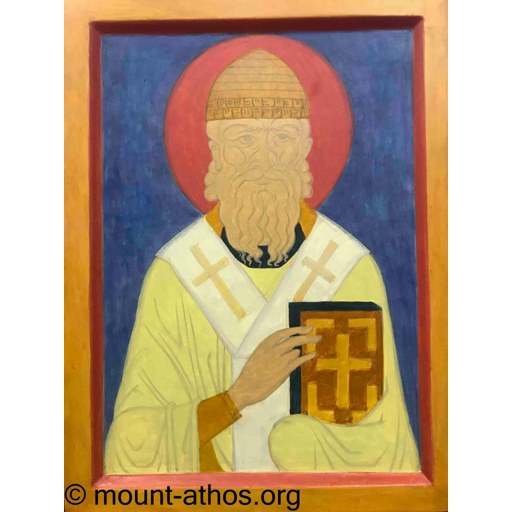
https://mount-athos.org/en/my-icons/spyridon
License: unknown
Spiridon Yevtushenko
Saint- Gender
- male
- Church
- Catholic
Places
Roles & Family
Biography
Spiridon Yevtushenko is a figure for whom virtually no independently verifiable biographical data appear in standard historical, ecclesiastical, or hagiographical reference works. The Wikidata identifier Q15066255 indicates that an entry exists in that collaborative knowledge base, yet the contents of that entry cannot be corroborated from published scholarly literature, synaxaria, episcopal catalogues, or the major biographical dictionaries of the Orthodox churches. No birth year, death year, or place of origin can be confirmed from reliable sources, and no office-taking date may be substituted for a birth date.
The given name Spiridon (also rendered Spyridon or Spiridion) is a traditional Orthodox Christian baptismal name, most famously borne by the fourth-century wonderworker Spyridon of Trimythous, a bishop on Cyprus whose cult spread widely through the Byzantine and Slavic worlds. The surname Yevtushenko is characteristically East Slavic and especially Ukrainian. Taken together, the name points toward an East Slavic, most probably Ukrainian, cultural and religious milieu, likely within an Orthodox setting of the modern period, though no specific diocese, monastery, parish, or century of activity can be associated with this individual on the basis of available sources.
No evidence has been located that would establish whether he was a monk, a married parish priest, a bishop, or a layman. Claims of episcopal or patriarchal office, of marriage or celibacy, of children, or of any process of beatification or canonization cannot be substantiated. He does not appear among the Bishops of Rome or the Coptic Popes of Alexandria, nor among the patriarchs or catholicoi of the Orthodox, Oriental Orthodox, Coptic, or Church of the East sees. No feast day is recorded in the menologia of the Russian, Ukrainian, or Constantinopolitan churches, and no patronages are attested.
In the absence of primary documents, contemporary chronicles, or even reliable secondary notices, it is impossible to reconstruct a life story. The present account therefore confines itself to noting the extreme paucity of information and to cautioning against the substitution of conjecture for evidence. Further research in regional Ukrainian or Russian archives, diocesan records, or specialized databases of clergy might in future yield additional facts; until such material is published and verified, the historical record concerning Spiridon Yevtushenko remains essentially blank.