Stephen IV is a saint of the Catholic Church (d. 817).
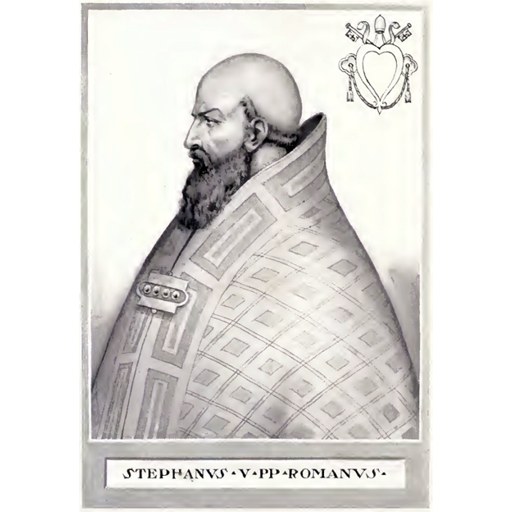
Artaud de Montor (1772–1849)
License: Public domain
Stephen IV
Saint- Life Span
- d. 817
- Gender
- male
- Church
- Catholic
Places
Relics & Where to Venerate
Location unknown
The bodily remains of Stephen IV are a first-class relic. Venerated at St. Peter's Basilica.
Roles & Family
Biography
Stephen IV was bishop of Rome from June 816 until his death in January 817. He was a native of Rome and came from a noble family; the Liber Pontificalis names his father as Marinus. He belonged to the clerical establishment of the Lateran in the late eighth and early ninth centuries, a period when the papacy was consolidating temporal authority in central Italy under Frankish protection after the decline of Byzantine control. Pope Leo III ordained him subdeacon and later deacon. No reliable source records a year of birth, and nothing secure is known of his life before this Lateran service.
Leo III died in June 816. Stephen was elected with unusual speed by the Roman clergy and people and was consecrated on 22 June 816, without waiting for confirmation from the Frankish emperor. The haste reflected both a wish to preserve the customary freedom of papal elections and the unsettled atmosphere left by Leo’s pontificate, which had included a violent assault on the pope in 799 and lingering factional conflict in the city. The new pope thus took office amid Roman aristocratic rivalries and a Western imperial order recently established under Charlemagne and inherited by Louis the Pious.
The central act of the short pontificate was Stephen’s journey to Francia in the autumn of 816. At Reims, on 5 October 816, he crowned and anointed Louis the Pious as emperor, liturgically renewing the imperial dignity that Leo III had conferred on Charlemagne in Rome in 800. Empress Irmingard (Ermengarde) was crowned as well. Stephen obtained from Louis assurances concerning the rights, privileges, and territorial possessions of the Roman Church, in continuity with earlier Frankish guarantees associated with Pepin and Charlemagne. Frankish annals stress the honor shown to the pope and the political-religious weight of the meeting. By crowning Louis at Reims rather than in Rome, Stephen both recognized Carolingian power and kept the initiative of a pope who had been chosen and consecrated in Rome without prior imperial leave.
Stephen returned to Rome later in 816. He died there on 24 January 817, after a pontificate of only about seven months, and was buried in St. Peter’s Basilica. Paschal I succeeded him. Contemporary papal biography credits him with piety and generosity toward clergy and the poor, but little else is recorded of administration or pastoral legislation. His reign is historically important less for length than for the combination of a rapid, locally decided election with the Reims coronation, which together illustrate how the early-ninth-century papacy tried to balance Roman autonomy against the need for Frankish imperial protection.