Stephen of Nicaea is a saint of the Catholic Church.
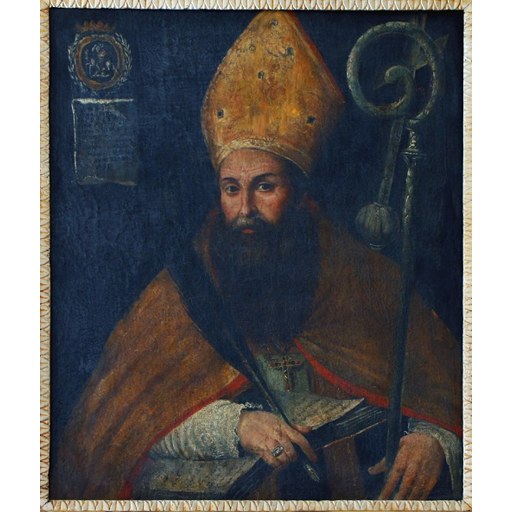
Scuola meridionale
License: Public domain
Stephen of Nicaea
Saint- Gender
- male
- Church
- Catholic
Places
Roles & Family
Biography
Stephen of Nicaea is an obscure figure whose life cannot be reconstructed from surviving, independently checkable historical sources. The epithet associates him with Nicaea in Bithynia (modern İznik in northwestern Turkey), an important late Roman and Byzantine city and the seat of a metropolitan bishop under the Patriarchate of Constantinople. Nicaea hosted the First Ecumenical Council in 325 and the Seventh in 787, and its church ranked among the leading sees of Asia Minor. Clerics named Stephen appear in various episcopal lists and synodal contexts connected with Bithynia, but the documentation does not isolate one securely identifiable biography matching this designation.
No contemporary vita, inscription, chronicle notice, or conciliar signature can be firmly attached to him in standard historical and hagiographical reference works. Consequently his years of birth and death, place of origin, manner of death, and burial site remain unknown. Later martyrologies and synaxaria sometimes preserve the names of local bishops, confessors, or monks with little or no narrative attached; Stephen of Nicaea may belong to that poorly documented class. Without a clearly attested feast in the principal Eastern or Western calendars, or a known shrine, a widespread cult cannot be demonstrated.
A metropolitan or other cleric of Nicaea in the late antique or Byzantine period would have lived amid the Christological and iconoclastic controversies that repeatedly involved the Bithynian church. Participation in regional synods or in the defense of received doctrine is therefore historically plausible for someone of that title, yet no treatise or conciliar act can be attributed to this Stephen with certainty. Eastern bishops of the era were often chosen from the monastic clergy, though marriage before episcopal ordination occurred in earlier centuries; neither a religious profession nor a marital or parental history is documented here.
If he was venerated, the cult was almost certainly local rather than universal. Formal papal canonization and beatification as later practiced in the Latin Church did not apply to most first-millennium Byzantine or late antique figures, whose sanctity was recognized through popular devotion, liturgical memory, and episcopal approval. No patronage of places, professions, illnesses, or social groups is recorded in the major collections. The historical Stephen of Nicaea therefore illustrates the many secondary ecclesiastical names that survive while the facts of the life have been lost.