Stephen of Piperi is a venerable of the Catholic Church (d. 1697). Stephen of Piperi's feast day is celebrated on 20 May.
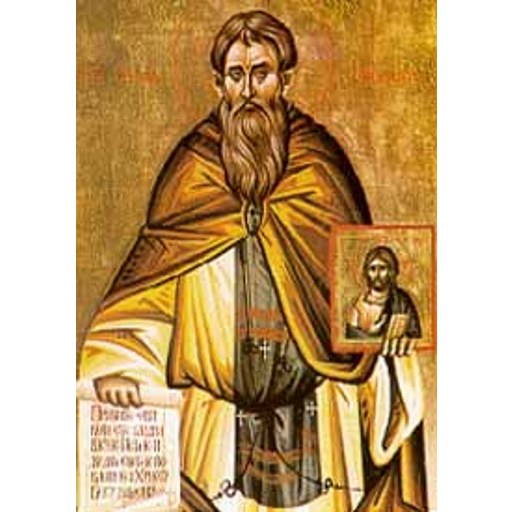
License: CC BY-SA 3.0
Stephen of Piperi
Venerable- Life Span
- d. 1697
- Feast Day
- 20 May
- Gender
- male
- Church
- Catholic
Places
Roles & Family
Canonization
Biography
Stephen of Piperi (Serbian: Stefan Piperski) was a Serbian Orthodox monk and hermit of the seventeenth century, venerated as a saint in the Serbian Orthodox Church. He was born in the village of Župa Nikšićka, in the Nikšić region of what is now Montenegro, then under Ottoman rule. The year of his birth is not recorded in surviving sources, nor are reliable details of his family preserved. He entered monastic life at the Monastery of Morača, a major Serbian Orthodox house in the region, where he was tonsured and trained in the Orthodox ascetic tradition.
He later lived at the Monastery of Ostrog during the lifetime of Saint Basil of Ostrog (Vasilije Ostroški), the metropolitan and wonderworker who died in 1671. Orthodox tradition presents Stephen as sharing the austere monastic life at Ostrog under Basil’s spiritual influence. After Basil’s death he left Ostrog and sought greater solitude in the Piperi highlands north of present-day Podgorica.
In Piperi he established a small cell, later known as Ćelija Piperska, and lived there as a hermit, devoted to prayer, fasting, and stillness. The cell became the nucleus of a small monastic community. He is remembered in local tradition as an elder of strict practice who was held in reverence by Christians of the Montenegrin Brda (Highlands). He did not hold episcopal or patriarchal office.
Stephen died on 20 May 1697 at his hermitage in Piperi. His relics have been kept at the Monastery of Ćelija Piperska and remain an object of Orthodox veneration. The Serbian Orthodox Church commemorates him on 20 May according to the Julian calendar (corresponding to 2 June in the Gregorian calendar). Surviving accounts of his life are chiefly liturgical and hagiographical rather than archival, and many particulars of his early years remain unknown.