Sulpicius Severus is a saint of the Catholic Church.
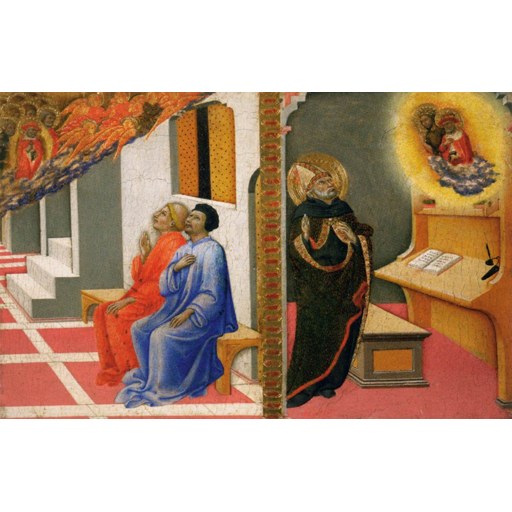
Sano di Pietro
License: Public domain
Sulpicius Severus
Saint- Gender
- male
- Church
- Catholic
Places
Roles & Family
Biography
Sulpicius Severus was a Gallo-Roman Christian writer, historian, and ascetic of the late fourth and early fifth centuries. He was born into a prominent family in Aquitaine, in the western provinces of the Roman Empire, in the region that corresponds to modern southwestern France, around the middle of the fourth century (commonly estimated near 360 to 363). Ancient notices, especially that of Gennadius of Marseille, emphasize his noble birth and learning. He received the literary and rhetorical education typical of the senatorial aristocracy of late Roman Gaul and trained as an advocate, practicing law with success. He married a wealthy woman of consular family; her personal name is not preserved in the surviving literature. Her death, while he was still a relatively young man, prompted a decisive change of life.
Following his wife's death, Severus abandoned his legal career and embraced a life of Christian asceticism and poverty. He placed himself under the spiritual influence of Martin, the monk-bishop of Tours, whom he visited and whose way of life he sought to imitate. He settled with companions on an estate known as Primuliacum, a site in southern Gaul whose precise identification remains uncertain among modern scholars. There he lived in a small monastic community. He formed a lasting friendship with Paulinus of Nola, another aristocrat who had renounced secular honors for an ascetic Christian life; letters of Paulinus refer to Severus's conversion, his manner of living, and their shared devotion to Martin. Whether Severus was ordained to the priesthood is not securely established; later catalogues sometimes call him a presbyter, but the point has been disputed.
Severus's reputation rests above all on his writings about Martin of Tours. The Life of Saint Martin, composed in polished Latin near the end of the fourth century, presented Martin as a miracle-working monk and bishop and became one of the most widely read hagiographical texts of the Latin Middle Ages. He supplemented it with letters and with the Dialogues, in which interlocutors discuss Martin's wonders and set Gallic monasticism beside the traditions of the Egyptian desert. These works, indebted in style to classical historians such as Sallust and to earlier Christian lives, fixed the image of Martin for later centuries and helped to spread the ideal of the monastic bishop in the West. They are also important, if partisan, sources for the religious history of late antique Gaul.
He further wrote a two-book Chronicle, a compressed sacred history running from the creation of the world to approximately the year 400. The Chronicle is of particular value to historians for its account of the Priscillianist movement in Spain and Gaul and of the execution of Priscillian, which Severus treated as a scandalous appeal to imperial authority in a matter of heresy. Gennadius, writing later in the fifth century, reports that in old age Severus was drawn into error associated with Pelagian teaching and that he thereafter imposed a perpetual silence upon himself as penance. He is believed to have died in Gaul in the 420s. The exact places of his death and burial are not recorded in sources that can be verified.