Sycus is a saint of the Catholic Church.
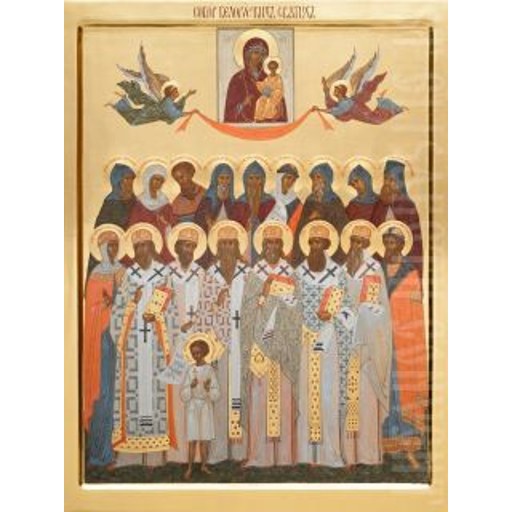
https://catalog.obitel-minsk.com/icons-prav/painted-icons.html
License: unknown
Sycus
Saint- Church
- Catholic
Biography
The name Sycus does not appear in the principal collections of Christian hagiography that a historian would consult for a verified biography. Neither the Roman Martyrology nor the major Eastern synaxaria, nor Butler's Lives of the Saints, nor the Acta Sanctorum of the Bollandists, record a saint, martyr, bishop, or monastic founder under this name. Standard encyclopedias of the saints and the relevant volumes of the Bibliotheca Sanctorum likewise yield no entry. In the absence of a Wikidata identifier, a Wikipedia article, a feast day, a place of cult, or even a century of activity, it is not possible to attach this name to a documented historical person.
Names of similar sound have sometimes been proposed in informal discussion, but they belong to different figures and must not be substituted. Saint Syrus (San Siro), first bishop of Pavia in northern Italy, is a fourth-century figure whose cult is well attested in Lombardy; his name is Latin Syrus, not Sycus. The Alexandrian martyrs Cyrus and John (Abba Cyrus) belong to the Egyptian tradition. The popes named Sixtus (Xystus) are a distinct series of Bishops of Rome. None of these identifications is supported by a primary source that actually uses the form Sycus, and conflating them would violate the requirement to prefer a blank field over an unverified claim.
Because no reliable source supplies a birth year, death year, place of origin, place of death, burial site, or religious affiliation for a person called Sycus, those data remain unknown. There is likewise no evidence that the name belonged to a pope, a patriarch, a member of a religious order, or a married person with or without children. No patronage is recorded, and no act of canonization or beatification can be cited. The figure, if historical at all, has left no trace that meets the standard of verification required for a cautious hagiographical notice.
Any future identification would require at least one independent, dated source—an inscription, a liturgical calendar of known provenance, a passio, or a mention in a church historian—that explicitly names Sycus and situates him or her in time and place. Until such a source is produced, the responsible course is to leave every biographical field empty rather than to guess.