Symmachus is a saint of the Catholic Church (d. 514). Symmachus's feast day is celebrated on 19 July.
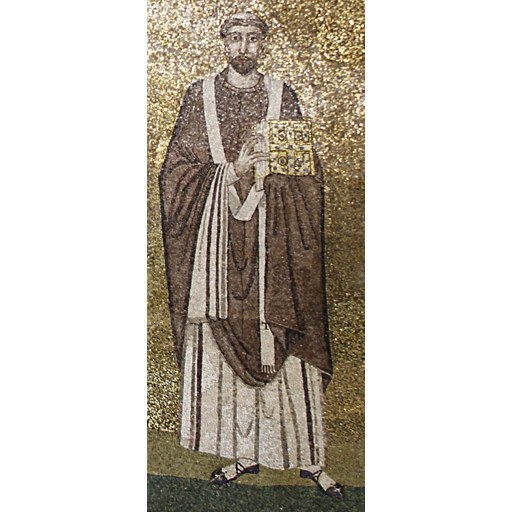
José Luiz
License: CC BY-SA 4.0
Symmachus
Saint- Life Span
- d. 514
- Feast Day
- 19 July
- Gender
- male
- Church
- Catholic
Places
Relics & Where to Venerate
Location unknown
The bodily remains of Symmachus are a first-class relic. Venerated at St. Peter's Basilica.
Roles & Family
Biography
Pope Symmachus was Bishop of Rome from 22 November 498 until his death on 19 July 514. He was born in Sardinia, the son of a man named Fortunatus; neither a more precise birthplace nor a year of birth is recorded in surviving sources. According to the Liber Pontificalis he was baptized in Rome, entered the Roman clergy, and rose to be archdeacon under Pope Anastasius II. When Anastasius died in November 498 the Roman church split. A majority of the clergy elected Symmachus, while a minority of clergy together with senatorial supporters led by the former consul Festus elected the archpriest Laurentius. Both men were consecrated on the same day, producing the Laurentian schism that overshadowed much of the pontificate.
King Theodoric the Ostrogoth, ruling Italy from Ravenna, at first confirmed Symmachus on the ground that he had been elected earlier and by the larger number of electors; Laurentius was for a time assigned the see of Nocera. Opposition continued. Accusers charged Symmachus with unchastity, with alienation of church property, and with celebrating Easter in 501 on 25 March according to the older Roman computation rather than on the Alexandrian date of 22 April. Factional violence broke out in the streets of Rome. Theodoric summoned the pope to Ravenna; Symmachus set out but turned back at Ariminum (Rimini) when he learned that his opponents were already there and that condemnation seemed likely. A Roman synod of 501, known as the Synodus Palmaris, refused to judge him and asserted that the occupant of the apostolic see is judged by God alone. Laurentius nonetheless occupied the Lateran and kept a rival administration for several years. Only after Theodoric, around 506, ordered the Roman churches restored to Symmachus did Laurentius withdraw, retiring to the estates of Festus. In the course of the struggle, supporters of Symmachus produced documents now called the Symmachian forgeries, which purported to supply earlier precedents for papal immunity from earthly trial.
Despite the schism, Symmachus undertook building and charitable works in Rome. He constructed or restored the basilica of Saint Agnes on the Via Nomentana and the church of Saint Pancras, adorned Saint Peter's, and established episcopal lodgings and xenodochia (hospices for the poor and for pilgrims) near the Vatican, Saint Paul's, and Saint Mary Major. He sent money, clothing, and other aid to Catholic clergy and laity suffering under Arian Vandal rule in North Africa and on Sardinia, and he is credited with ransoming captives. Toward Constantinople he declined to accept the Henotikon of Zeno or to restore the name of Acacius, remaining at odds with the emperor Anastasius I throughout the Acacian schism. He also addressed disciplinary questions to bishops in Gaul and other western provinces.
Symmachus died in Rome on 19 July 514 and was buried in the portico of Saint Peter's Basilica. He was succeeded by Hormisdas. The Catholic Church venerates him as a saint, with liturgical commemoration on 19 July. The chief sources for his pontificate are the Liber Pontificalis, notices of the Roman synods of 499, 501, and 502, papal letters, and the partisan Laurentian Fragment, which offers a hostile account of his election and character. Historians treat these materials with caution, using them to reconstruct both the violence of Roman clerical and senatorial faction under Ostrogothic rule and the development of the claim that the first see cannot be judged by any earthly tribunal.