Tadhg Mac Cárthaigh is a blessed of the Catholic Church (d. 1492). Tadhg Mac Cárthaigh's feast day is celebrated on 25 October.
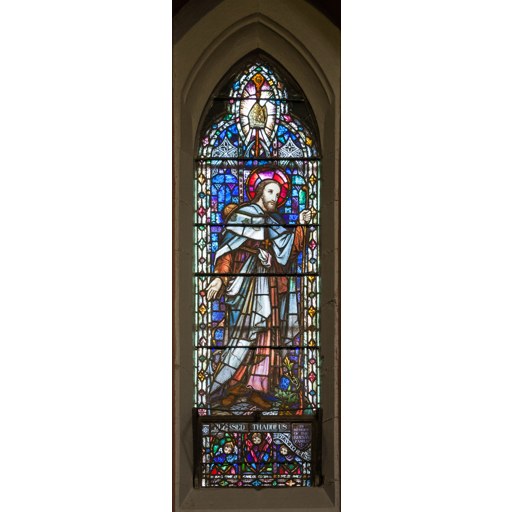
Andreas F. Borchert
License: CC BY-SA 4.0
Tadhg Mac Cárthaigh
Blessed- Life Span
- d. 1492
- Feast Day
- 25 October
- Gender
- male
- Church
- Catholic
Places
Roles & Family
Canonization
Biography
Tadhg Mac Cárthaigh, known in English as Thaddeus McCarthy and venerated in the Catholic Church as Blessed Thaddeus, belonged to the Mac Cárthaigh (MacCarthy) dynasty, the principal Gaelic ruling house of Desmond in Munster. He was born in the mid-fifteenth century in the region of present-day County Cork; neither a precise birth year nor a documented town of birth has been preserved in contemporary records. His career unfolded against the late medieval background of competing claims to Irish bishoprics, in which papal provision, local dynastic interest, and the remaining authority of the English crown in the port towns all played a part. He was ordained to the priesthood and, while still a young man, was named by Pope Sixtus IV in 1482 to the Diocese of Ross, whose cathedral lay at Rosscarbery on the Cork coast.
That provision did not bring him secure possession of the see. A rival claim and the opposition of local factions kept him from exercising ordinary jurisdiction in Ross, so that for a number of years he was a bishop in exile from his own cathedral. In 1490 Pope Innocent VIII translated him to the united Dioceses of Cork and Cloyne, which were of greater standing and which had fallen vacant. When he arrived in Ireland with the papal bulls of appointment he was again rejected. Tradition holds that he was denounced as a pretender, denied recognition by clergy and civic authorities in Cork, and compelled to leave; some later narratives add that he suffered imprisonment. Unable to take possession of his church, he undertook the long journey to Rome as a poor pilgrim in order to obtain a fresh confirmation of his rights from the Holy See. Innocent VIII received him and upheld his title to Cork and Cloyne.
On the return journey through the Italian peninsula he reached Ivrea, a town in Piedmont then belonging to the Duchy of Savoy, worn out by hardship and travel. On 24 October 1492 he was received into a hospice for pilgrims. He died there the next day, 25 October 1492. Those who laid out his body found a bishop’s ring, a pectoral cross, and the papal documents that proved his identity and office. Accounts preserved at Ivrea describe a mysterious light over the place where he had died and an immediate popular belief that a holy bishop had passed through the town unrecognized. He was buried with episcopal honours in the cathedral of Ivrea. Devotion to him took root locally, and he was remembered as a prelate who had died in poverty far from his diocese.
Interest in his story was renewed in 1742 when workmen in the cathedral uncovered the tomb and an inscription identifying the buried man as bishop of Cork and Cloyne in Ireland. Irish prelates of the eighteenth and nineteenth centuries, including bishops of Cork, took up the cause of his recognition. Pope Leo XIII confirmed his cult on 26 August 1895, an act of equipollent beatification, after which he has been styled Blessed Thaddeus McCarthy. His feast is kept on 25 October, notably in the dioceses of Cork, Cloyne, and Ross and in the Diocese of Ivrea. In Munster he has long been called the White Martyr, in the older Irish Christian sense of one who suffered exile and injustice rather than death by violence. Relics were later shared with the Church in Cork. Beyond that local and diocesan veneration, formal patronages of particular causes or professions are not securely attested in the historical record.