Tammaro is a saint of the Catholic Church. Tammaro's feast day is celebrated on 16 January. Tammaro is the patron saint of San Tammaro (Campania).
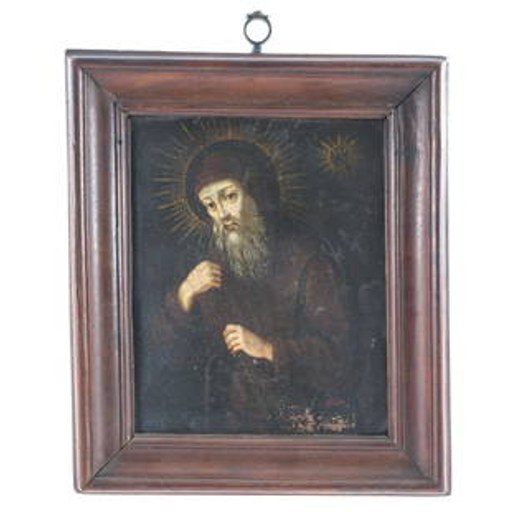
https://www.liveauctioneers.com/price-result/francesco-tammaro-italian-b-1939-a-painting-st/
License: unknown
Tammaro
Saint- Feast Day
- 16 January
- Gender
- male
- Church
- Catholic
Places

Roles & Family
Patronage
San Tammaro (Campania)
Biography
Saint Tammaro, known in Latin as Tammarus, is a Christian bishop of the fifth century venerated as a saint in the Catholic Church, above all in Campania in southern Italy. According to long-standing hagiographical tradition he was one of a group of North African Catholic bishops who fled their sees during the Vandal domination of Roman Africa. Under King Genseric the Vandals, who professed Arian Christianity, subjected Nicene clergy to exile, confiscation, and other hardships. Tammaro is said to have left Africa together with several companions. Medieval lists of this company typically include Priscus, Castrense, Rosius, Heraclius, Secundinus, Elpidius, Marcus, and Condro, though names and numbers vary from source to source. No contemporary African or Italian document names Tammaro, and his biography is known only through later legend and local cult.
The refugees are traditionally described as landing on the Tyrrhenian coast of Campania, often near the mouth of the Volturno or at Castel Volturno, and then traveling inland toward Capua, then a major city and ecclesiastical center. Saint Priscus became associated with the church of Capua and is the best known of the group in later Capuan tradition. Tammaro’s own episcopal see is not securely identified. Later local memory has linked him with Atella, an ancient bishopric in the plain between Capua and Naples, or more generally with the Capuan countryside. Surviving evidence does not allow a firm reconstruction of his pastoral career, the length of his episcopate, or the date of his death. He belongs to the large class of late antique saints whose historical outline is faint but whose names were preserved by place-names, church dedications, and liturgical calendars.
Devotion to Tammaro took root in northern Campania. The comune of San Tammaro in the province of Caserta is named for him and honors him as its patron saint. A church dedicated to the saint stands in the town, and local tradition maintains that his relics were kept there. In the liturgical sources that record his feast, Saint Tammaro is commemorated on 16 January. Like other members of the so-called African bishops of Campania, he helped to shape the sacred geography of the region in the early Middle Ages, even if the written lives that explain his presence there were composed centuries after the events they purport to describe.
Modern historical scholarship treats the cycle of African bishops in Campania with caution. The motif of a band of prelates fleeing Genseric and finding refuge in Italy appears in several related legends, and individual biographies are often late, contradictory, or dependent on one another. No reliable year of birth or death can be established for Tammaro, nor a fully documented see. What can be affirmed with greater confidence is that by the later Middle Ages a holy bishop named Tammaro was venerated in the territory of Capua, that a settlement and parish bore his name, and that his memory was that of an African exile and pastor. He was not Bishop of Rome, nor a patriarch of an Eastern church, and there is no evidence that he belonged to a later religious order. His cult remains primarily local, centered on the town that still carries his name.