Tatwine is a saint of the Catholic Church (d. 734). Tatwine's feast day is celebrated on 30 July.
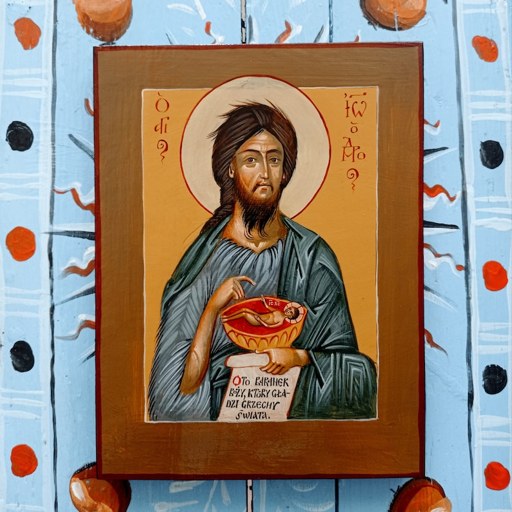
https://www.etsy.com/uk/listing/1518487637/saint-john-the-baptist-picture-icon
License: unknown
Tatwine
Saint- Life Span
- d. 734
- Feast Day
- 30 July
- Gender
- male
- Church
- Catholic
Places
Roles & Family
Religious Information
Biography
Tatwine (also spelled Tatwin or Tatuini) was an eighth-century Anglo-Saxon churchman who became the tenth Archbishop of Canterbury. A Mercian by birth, he is first securely attested as a priest of the monastery of Briudun, now Breedon-on-the-Hill in Leicestershire, in the kingdom of Mercia. No reliable evidence survives for the date or precise place of his birth, his family, or the circumstances of his entry into monastic life. The Venerable Bede, writing in 731 while Tatwine was newly in office, described him as a man distinguished by religion and wisdom and exceptionally well instructed in the scriptures and in ecclesiastical literature. That judgment is the principal contemporary witness to his character and learning before his elevation to the metropolitan see.
In 731, after the death of Archbishop Berhtwald, Tatwine was chosen for Canterbury. The appointment is generally understood to reflect the political ascendancy of King Æthelbald of Mercia over Kent. Bede records that he was consecrated in the city of Canterbury on 10 June 731 by four bishops: Daniel of the West Saxons, Ingwald of London, Aldwine of Lichfield, and Ealdwulf of Rochester. In 733, according to the Anglo-Saxon Chronicle, he received the pallium at Rome, thereby obtaining papal confirmation of his metropolitan authority from Pope Gregory III. During a short pontificate of about three years he is credited with consecrating bishops, including Alwig for the see of Lindsey and Sigfrith for Selsey. His tenure thus combined Mercian political influence with the routine exercise of an English metropolitan’s rights.
Tatwine was also a Latin author. He composed an Ars grammatica, often called the Ars Tatuini, a treatise on Latin grammar that draws on Donatus, Consentius, Priscian, and other late antique authorities and survives in continental manuscripts. He further wrote a collection of forty verse riddles (enigmata) on grammatical, biblical, and theological subjects, in the Anglo-Latin riddle tradition associated with Aldhelm. A related group of riddles by a writer named Eusebius was sometimes transmitted together with Tatwine’s. These works, probably produced while he was still at Breedon, are the chief evidence for scholarly activity in that Mercian house and help explain the reputation for learning that Bede recorded.
Tatwine died in 734, a date given by the Anglo-Saxon Chronicle and by continuations of Bede; later liturgical tradition places the day on 30 July, which became his feast. He was succeeded by Nothhelm, a priest of London. Early archbishops of Canterbury were customarily buried at the monastery of Saints Peter and Paul (later St Augustine’s Abbey) outside the city, a practice altered later in the century under Archbishop Cuthbert, but no contemporary source names Tatwine’s grave. He was venerated as a saint in the medieval English church, yet evidence for a widespread cult is slight. He remains known primarily as the scholar-bishop recorded by Bede and as the author of a grammar and riddles, rather than as a figure of popular devotion.