Terence Cooke is a blessed of the Catholic Church (1921 - 1983).
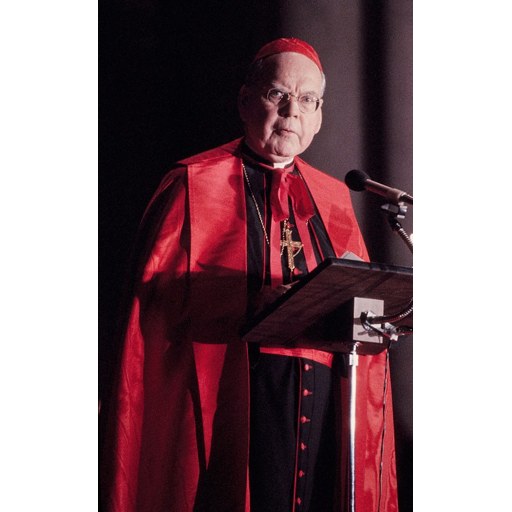
Bernard Gotfryd
License: Public domain
Terence Cooke
Blessed- Life Span
- 1921 - 1983 (age 62)
- Gender
- male
- Church
- Catholic
Places
Relics & Where to Venerate
Location unknown
The bodily remains of Terence Cooke are a first-class relic. Venerated at St. Patrick's Cathedral.
Roles & Family
Biography
Terence James Cooke was born in 1921 in New York City, the son of Michael Cooke and Margaret Gannon Cooke, Irish immigrants. He was the youngest of three children. His mother died while he was still a boy, after which the family lived in the Bronx, where his father and relatives raised him. Formed in the parish life of the Archdiocese of New York, he attended Catholic elementary school and Cathedral College, the archdiocesan minor seminary, then completed priestly studies at St. Joseph's Seminary, Dunwoodie, in Yonkers. He was ordained a priest for the Archdiocese of New York in 1945 by Cardinal Francis Spellman.
After ordination he combined pastoral work with further study. He served among other assignments at a home for children and earned a graduate degree in social work at the Catholic University of America in Washington, D.C. Returning to New York, he entered the central administration of the archdiocese as secretary to Cardinal Spellman and later as vice-chancellor, chancellor, and vicar general. In 1965 he was appointed auxiliary bishop of New York and consecrated that year. He remained a diocesan priest of New York rather than a member of a religious order, and he lived under the Latin Church discipline of clerical celibacy.
When Spellman died in 1967, Pope Paul VI named Cooke Archbishop of New York; he was installed in 1968 while still in his mid-forties. The following year he was created a cardinal. He also served as military vicar for Catholics in the United States armed forces. His episcopate coincided with the implementation of the Second Vatican Council, New York's fiscal and social crises of the late 1960s and 1970s, and intense debate over Catholic schools and public morality. He worked to sustain inner-city parochial education, supported Catholic Charities, and became a nationally known opponent of abortion after the 1973 Supreme Court decision. Contemporaries often noted his unassuming manner and his visits to parishes, hospitals, and the poor.
Cooke lived for years with cancer while continuing his public duties, disclosing only in 1983 that the illness was terminal. He died in New York City in October 1983, at the age of sixty-two, and was buried in the crypt of St. Patrick's Cathedral, the customary resting place of the city's archbishops. In the 1990s the Archdiocese of New York opened a cause for his canonization; he is titled Servant of God but has not been beatified or canonized. His historical reputation rests on pastoral leadership in a turbulent era, advocacy for the unborn and the disadvantaged, and patience in prolonged illness.