Teresa Merlo is a venerable of the Catholic Church (1894 - 1964).
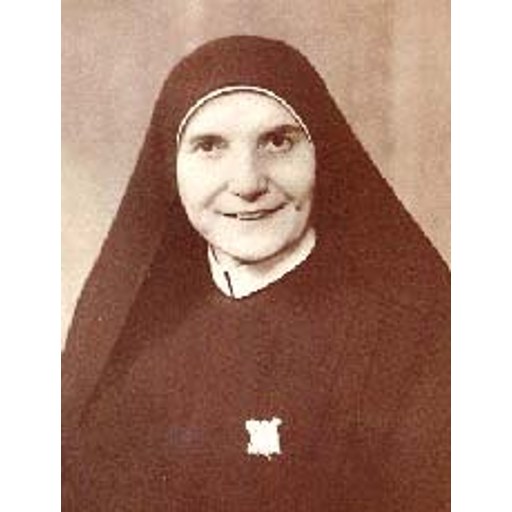
Towarzystwo Świętego Pawła
License: CC BY-SA 4.0
Teresa Merlo
Venerable- Life Span
- 1894 - 1964 (age 70)
- Gender
- female
- Church
- Catholic
Places
Roles & Family
Religious Information
Biography
Teresa Merlo was born on 20 February 1894 in Castagnito, in the province of Cuneo in Piedmont, northern Italy. She was raised in a Catholic family of modest rural circumstances and received the simple education typical of a small Piedmontese town at the end of the nineteenth century. In 1915, while still a young woman, she came into contact with Father James Alberione of the Diocese of Alba, who had begun to gather collaborators for an apostolate that would use the printing press and other modern means of communication to spread the Gospel. Merlo accepted his invitation and became one of the first members of the community of women that took shape beside Alberione’s Society of St. Paul. That community received the name Daughters of St. Paul and is traditionally regarded as having been founded in Alba in 1915.
Merlo took the religious name Thecla, recalling Saint Thecla, the early companion of the Apostle Paul in Christian tradition, and she was soon entrusted with the government of the new institute. She is recognized as co-foundress of the Daughters of St. Paul together with Alberione and served for many years as Superior General, a role the sisters called Prima Maestra. The congregation’s charism combined a strong Eucharistic, Marian, and Pauline spirituality with intense work in publishing, bookshops, and later other media. Under her direction the Daughters of St. Paul established printing plants and distribution centers, trained sisters as writers, technicians, and evangelizers, and developed a form of religious life adapted to the communications apostolate rather than to cloistered or purely charitable models.
From the interwar years onward Mother Thecla oversaw the congregation’s expansion beyond Italy. Houses were opened in other European countries and then in the Americas, Asia, and Africa, so that by the mid-twentieth century the Daughters of St. Paul had become an international institute. She undertook long journeys to visit these foundations, to encourage vocations, and to keep the sisters united to the spirit of the founder. Within the wider Pauline Family—which came to include the Society of St. Paul and several other congregations and institutes founded by Alberione—she was regarded as a maternal presence and as a faithful guardian of the Pauline charism of evangelization through the media.
Mother Thecla’s health, never robust, declined in her later years. She died on 5 February 1964 at Albano Laziale, near Rome, after a life spent almost entirely in the service of the congregation she had helped to found. A cause for her beatification was opened in the years after her death. Following examination of her writings and of testimony to her life, she was declared Venerable when her heroic virtues were recognized by the Holy See. She has not been beatified or canonized, and she has no universally assigned feast day or official patronages. The Daughters of St. Paul and the Pauline Family continue to honor her as co-foundress and to propose her as a model of Pauline religious life.