Theodore of Mopsuestia is a saint of the Catholic Church (350 - 428).
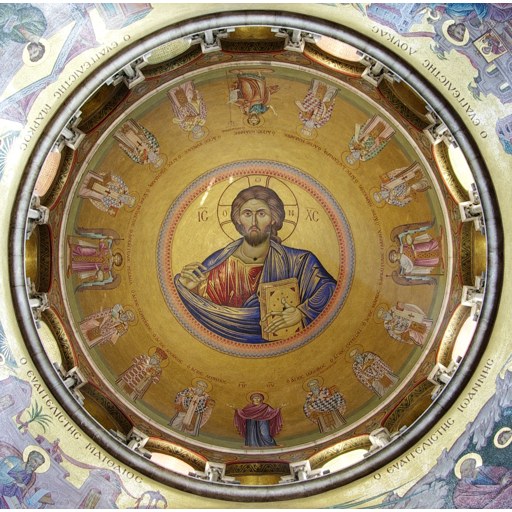
Berthold Werner
License: CC BY-SA 3.0
Theodore of Mopsuestia
Saint- Life Span
- 350 - 428 (age 78)
- Gender
- male
- Church
- Catholic
Places
Roles & Family
Biography
Theodore of Mopsuestia was a leading theologian and biblical interpreter of the Antiochene school and bishop of Mopsuestia in Cilicia from 392 until his death in 428. He was born in Antioch around the middle of the fourth century into a prosperous family and received a thorough classical education under the celebrated pagan rhetorician Libanius, in whose school he was a fellow student of John Chrysostom. Drawn toward the Christian ascetic life, he entered the community directed by Diodore of Tarsus, whose historical and grammatical approach to Scripture deeply shaped Theodore’s own exegesis. For a time he contemplated abandoning this way of life in order to marry a woman named Hermione and resume a secular career; two hortatory letters from Chrysostom, known as Ad Theodorum lapsum, are traditionally associated with persuading him to remain in the ascetic and clerical vocation. He did not marry and lived thereafter as a cleric.
Ordained to the priesthood at Antioch by Bishop Flavian, Theodore gained a reputation as a preacher and controversialist, writing against Arian, Eunomian, and Apollinarian teachings. In 392 he was consecrated bishop of Mopsuestia, a see in Cilicia, which he administered for thirty-six years. Throughout his episcopate he continued to produce an extensive body of biblical commentary covering, among other books, Genesis, the Psalms, the Twelve Prophets, the Gospels, Acts, and the Pauline epistles. He favored a literal, historical reading of the Old Testament and was reluctant to treat it as a tissue of direct messianic allegories, a method that distinguished the Antiochene tradition from the more allegorical Alexandrian school. His Catechetical Homilies, preserved in Syriac, set out a two-stage understanding of salvation history and a Christology that strongly distinguished the divine Word from the assumed human being.
During his lifetime Theodore was generally regarded as orthodox in the Greek-speaking churches of the East and maintained friendly relations with leading figures, including Chrysostom. His pupil Nestorius later became patriarch of Constantinople, and after Nestorius’s condemnation at Ephesus in 431, Theodore’s writings were increasingly read as the source of a doctrine that divided Christ into two persons. More than a century after Theodore’s death, the Second Council of Constantinople in 553, in the so-called Three Chapters controversy, formally condemned his person and his works. The condemnation was driven in large part by Emperor Justinian’s effort to reconcile miaphysite opponents of Chalcedon and was resisted for a time in parts of the West.
In the Church of the East, by contrast, Theodore remained a preeminent authority, honored as the Interpreter. Large portions of his exegetical and theological corpus survived in Syriac translation even where the original Greek was lost or destroyed. Modern scholarship has recovered a more nuanced picture of his thought, noting both his insistence on the full humanity of Christ and the ways in which later Nestorian and anti-Nestorian polemics simplified his positions. He died in 428 at Mopsuestia, still in communion with the wider imperial church and before the Christological controversies of the following decades had fully unfolded.