Theodore of Sykeon is a saint of the Catholic Church (d. 613). Theodore of Sykeon's feast day is celebrated on 22 April.
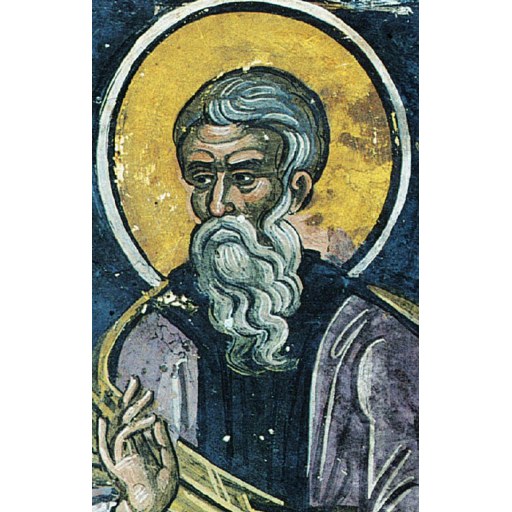
Unknown authorUnknown author
License: Public domain
Theodore of Sykeon
Saint- Life Span
- d. 613
- Feast Day
- 22 April
- Gender
- male
- Church
- Catholic
Places
Roles & Family
Biography
Theodore of Sykeon (also called Theodore the Sykeote) was a Byzantine monk, miracle-worker, and bishop whose life is known chiefly from a detailed Greek hagiography composed soon after his death by his disciple George. He was born in the mid-sixth century in the village of Sykeon in Galatia, on the main military highway between Constantinople and Ancyra in central Anatolia. His mother Maria, together with her mother Elpidia and her sister, kept an inn that also served as a brothel. According to the Life, Theodore’s father was Cosmas, an imperial courier who lodged at the inn; Maria is said to have considered aborting the child until a vision associated with Saint George dissuaded her. From early childhood Theodore showed intense devotion to Saint George, whose oratory stood near the village, and he began practices of fasting, vigil, and withdrawal that set him apart from his family and surroundings.
As a boy he adopted an extreme eremitical regime, living for periods in a cave beneath the oratory, wearing iron, and taking almost no food. He was tonsured as a cleric and, while still very young, ordained to the priesthood, an irregularity that the hagiographer attributes to his already widespread reputation for holiness and healing. Disciples gathered around him, and he established a monastery at Sykeon that became a regional centre of pilgrimage. The Life ascribes to him numerous healings, exorcisms, weather miracles, and prophetic sayings, and it portrays him as a spiritual authority for villagers, soldiers, and officials along the Anatolian road. His asceticism and wonder-working made him a characteristic figure of late antique rural monasticism in Asia Minor.
Reluctantly, and under pressure from clergy and laity, Theodore was elected bishop of Anastasiopolis, a nearby Galatian see. He held the office for about a decade, attempting to combine episcopal administration with his former monastic discipline, but he found the two ways of life incompatible. After obtaining the consent of the metropolitan and of imperial authority he resigned the bishopric and returned to his monastery. During these years he was drawn into the affairs of the capital. He visited Constantinople more than once and is described as having dealings with Emperor Maurice and, later, with Phocas and Heraclius. Hagiographical tradition credits him with prophecies concerning the fortunes of emperors and the Persian wars of the early seventh century, though such claims belong to the genre of the Life rather than to independently documented political history.
In his last years Theodore continued to act as a monastic superior and as an informal ecclesiastical mediator. He travelled again to Constantinople in the early seventh century and was received with honour by church and court before returning to Sykeon. He died there on 22 April 613, during the reign of Heraclius, and was buried at his monastery. George’s Life, written shortly afterward, is one of the most important narrative sources for rural society, popular religion, and imperial-provincial relations in Anatolia at the end of late antiquity. Theodore was venerated locally and was later entered in the synaxaria of the Eastern Church and in the Roman Martyrology; his feast is kept on 22 April in both the Eastern Orthodox and Roman Catholic calendars. No formal process of canonization in the later medieval or modern sense is recorded, and no securely attested specialized patronages are attached to his name.