Theodore of the Jordan is a venerable of the Catholic Church.
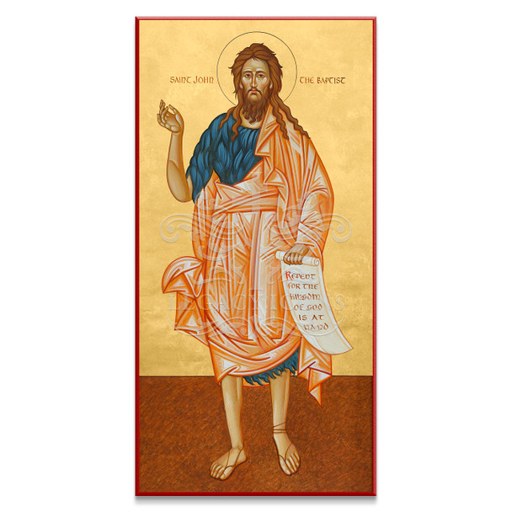
https://legacyicons.com/saint-john-the-baptist-koufos-icon-s654/
License: unknown
Theodore of the Jordan
Venerable- Gender
- male
- Church
- Catholic
Roles & Family
Biography
Theodore of the Jordan is a little-known Christian monastic saint of late antiquity, remembered in Eastern Christian tradition as a monk and hermit connected with the wilderness along the Jordan River. Reliable biographical data are extremely scarce. He is customarily assigned to the sixth century, when the Jordan valley and the adjoining Judean desert still formed one of the principal landscapes of Byzantine Palestinian asceticism. No contemporary vita of verified authorship has come down to us, and he is known chiefly from later liturgical notices that preserve his name and epithet rather than a connected life story.
The designation of the Jordan situates him among the solitaries and lavriote monks who inhabited caves, cells, and small communities near the river that Christian tradition associated with the baptism of Jesus and with John the Baptist. In the fifth and sixth centuries that region, together with the desert monasteries linked to Euthymius, Sabas, and Theodosius the Cenobiarch, attracted men from across the eastern Mediterranean. A hermit bearing Theodore’s name would have shared the ordinary pattern of Palestinian desert life: withdrawal from urban society, a rule of prayer and fasting, and dependence on a nearby coenobium or lavra for the Eucharist and for burial. Beyond that general setting, the circumstances of his conversion to the monastic life, his spiritual teachers, and his particular ascetic practices are not recorded in sources that can be independently checked.
Nothing certain is known of his birth, parentage, or native city. No year of birth or death can be established, and no burial place is documented. Later synaxaria sometimes embroider the lives of obscure desert fathers with conventional details, but such motifs are commonplaces of the genre and cannot be treated as verified historical facts in Theodore’s case. He did not hold episcopal, patriarchal, or papal office; his sanctity, as remembered, is that of a monk rather than of a hierarch.
Veneration of Theodore belongs to the Eastern Orthodox liturgical tradition, in which many Palestinian monks of this era were commemorated locally long before any centralized process of canonization existed. No act of formal canonization or beatification by a named pope or patriarch is recorded, nor are specific patronages of places, professions, or causes securely attached to him in the major martyrologies. His historical significance lies less in a recoverable personal career than in the way his name stands for the larger, poorly documented population of Jordan-valley hermits whose memory was kept in the calendars of the Byzantine Church.