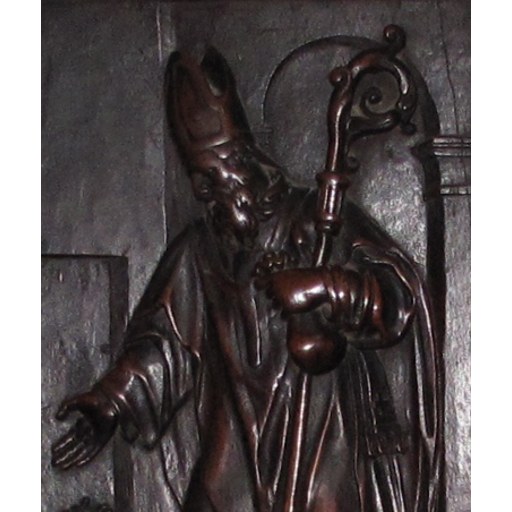
Theodorus I is a saint of the Catholic Church (d. 490). Theodorus I's feast day is celebrated on 27 July.
A ntv
License: CC BY-SA 3.0
Theodorus I
Saint- Life Span
- d. 490
- Feast Day
- 27 July
- Gender
- male
- Church
- Catholic
Places
Roles & Family
Biography
Theodorus I, known in Italian as Teodoro I, served as Archbishop of Milan from 475 to 490. Almost nothing can be established about his origins, education, or life before his elevation to the episcopate. He succeeded Bishop Senator at a time when the Western Roman Empire was in its last years. The Church of Milan, already distinguished by the memory of Saint Ambrose, continued to function as a metropolitan see of great prestige in northern Italy, and its bishop was a figure of both religious and civic importance.
His years as archbishop coincided with the deposition of the last Western emperor, Romulus Augustulus, by the Herulian leader Odoacer in 476. Odoacer, an Arian, issued an edict of tolerance toward the Catholic faith in 477. According to later accounts, Theodorus succeeded in obtaining from the new ruler a confirmation of the privileges traditionally enjoyed by the Church of Milan. In this way the Nicene community of the city retained its legal and institutional standing despite the change of political regime. No writings of Theodorus himself have been preserved.
Sources that mention him, including the liturgical diptychs of the Ambrosian Church, present Theodorus as a humble and modest pastor. He died on 27 July 490 and was buried in the Basilica of San Lorenzo in Milan. The Catholic Church honors him as a saint, and his feast day is observed on 27 July, particularly within the Ambrosian Rite of the Archdiocese of Milan.
The historical record concerning Theodorus is exceptionally thin. No contemporary biography or substantial correspondence survives, and later hagiographical notices supply few additional facts that can be verified. He therefore remains a relatively obscure figure, known chiefly through episcopal catalogues and liturgical commemoration. His principal historical role was to steer the Milanese church through the transition from imperial to post-imperial rule while maintaining its Catholic character and privileges. He was succeeded by Lawrence I.