Theodosia of Constantinople is a saint of the Catholic Church (d. 729). Theodosia of Constantinople's feast day is celebrated on 18 January; 29 May.
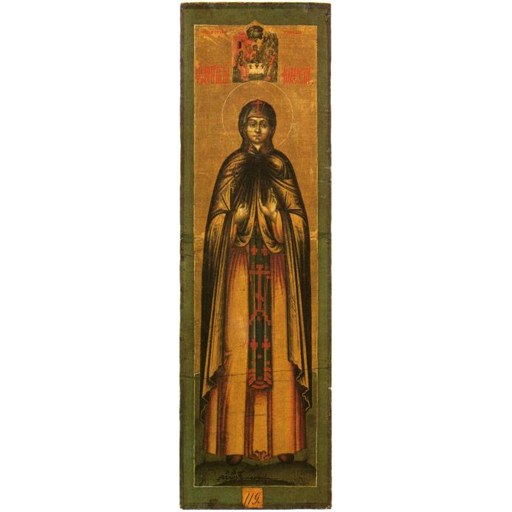
УЛАНОВ КИРИЛЛ ИВАНОВ (уп. 1684, ум. 1731)
License: Public domain
Theodosia of Constantinople
Saint- Life Span
- d. 729
- Feast Day
- 18 January; 29 May
- Gender
- female
- Church
- Catholic
Places
Relics & Where to Venerate
Location unknown
== Veneration == Following the Triumph of Orthodoxy over iconoclasm, she was recognized as a martyr and saint, and her body was kept and venerated in the church of Hagia Euphemia en to Petrio, in the quarter named Dexiokratianai, named after the houses owned here by one Dexiokrates
Roles & Family
Biography
Theodosia of Constantinople, also called Saint Theodosia the Virgin-Martyr, was a Byzantine nun commemorated as a martyr of the first Iconoclastic period. She is held to have lived in the imperial capital in the late seventh and early eighth centuries and to have died there in 729, in the reign of Emperor Leo III the Isaurian. Almost nothing about her can be confirmed from strictly contemporary documents. The principal accounts of her life and death are later hagiographical texts, including entries in the Byzantine synaxaria and a Life that took shape after the restoration of icons in 843. Historians therefore treat the richly detailed narrative with caution, while acknowledging that a female martyr associated with resistance to the removal of sacred images became an important figure in Constantinopolitan devotion.
According to the traditional vita, Theodosia was born in Constantinople to parents of means who were known for their Christian piety. Her father died while she was still a child, and her mother undertook her religious education. When her mother also died, Theodosia is said to have given her inheritance to the poor and to have entered the monastery dedicated to the Holy Martyr Anastasia in Constantinople. There she received the monastic tonsure and passed her years in prayer, fasting, and the veneration of icons, in keeping with the piety of the capital before the outbreak of iconoclasm. No independent record preserves the names of her parents or the date of her profession, and the early chapters of her legend cannot be verified outside the later saint’s life.
In the 720s Leo III initiated a policy hostile to the public cult of images. The decisive episode in Theodosia’s legend is the attempt to take down the icon of Christ that adorned the Chalke Gate of the Great Palace, an act dated in the hagiographical tradition to 729, though modern reconstructions of the first Iconoclastic measures sometimes place the Chalke incident in 726 or 730. A crowd of women, with Theodosia named as prominent among them, tried to stop the soldiers. In the struggle the officer charged with removing the image fell from his ladder and was killed. The women were arrested. Theodosia, regarded as the instigator, was imprisoned and tortured. The most characteristic account of her execution states that her tormentors drove a ram’s horn through her neck; other versions say she was put to the sword. She died in Constantinople and was honoured by iconodule Christians as a martyr. The earliest narratives of the Chalke disturbance do not name her, and her fully developed legend appears only in later medieval sources.
Devotion to Theodosia grew in the following centuries, especially after the Triumph of Orthodoxy. A church in the Dexiokrates quarter of Constantinople was dedicated to her and became the centre of her cult; her relics were venerated there. In the Eastern Orthodox calendar her chief feast falls on 29 May. She is also remembered on 18 January in some Orthodox synaxaria and in Western martyrological tradition. The church associated with her name survived into the late Byzantine period. After the Ottoman capture of the city it was converted into a mosque, subsequently known as the Gül Camii, or Rose Mosque, a name later linked in popular memory with roses said to have decorated the church on her May feast. Theodosia is honoured as a virgin-martyr and as a symbol of monastic and lay resistance to iconoclasm. She belongs to the pre-congregation era of sanctity and was not the object of a formal papal canonization of the later Western type.