Theodosius of Chernihiv is a saint of the Catholic Church (d. 1696). Theodosius of Chernihiv's feast day is celebrated on 5 February and 9 September.
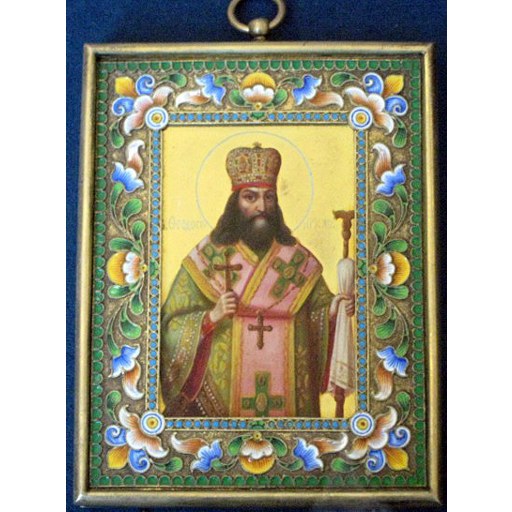
shakko
License: CC BY-SA 3.0
Theodosius of Chernihiv
Saint- Life Span
- d. 1696
- Feast Day
- 5 February and 9 September
- Gender
- male
- Church
- Catholic
Places

Relics & Where to Venerate
Location unknown
The bodily remains of Theodosius of Chernihiv are a first-class relic. Venerated at Saints Borys and Hlib Cathedral.
Roles & Family
Canonization
Biography
Saint Theodosius of Chernihiv, also known as Theodosius of Chernigov, was a seventeenth-century Eastern Orthodox hierarch who served as Archbishop of Chernihiv. In secular life he bore the name Theodore and belonged to the Polonitsky-Uglitsky family, a line of Orthodox lesser nobility. He was born in the 1630s in Podolia, on the Right Bank of the Dnieper, then under the Polish-Lithuanian Commonwealth. His father Nikita was a priest. Surviving sources do not preserve a precise birth year, a native village that can be verified with certainty, or a detailed account of his childhood. Later church biographies stress only that he grew up in an Orthodox clerical household at a time when the Orthodox Church in the Commonwealth was under legal and social pressure from Latin and Uniate authorities. He was sent to Kiev and educated at the Kiev Brotherhood School, the institution that developed into the Kiev-Mohyla Collegium, where Ruthenian Orthodox students combined patristic and liturgical formation with the Latin and Polish learning then current in the region.
After his studies he entered monastic life and received the name Theodosius. He served as a hieromonk and was entrusted with houses that required restoration of discipline and economy, including a monastery at Korsun and later the ancient Vydubychi Monastery on the Dnieper near Kiev. In the later 1680s Archbishop Lazar Baranovich of Chernihiv, a leading Orthodox churchman and writer of Left-bank Ukraine, called him to Chernihiv and appointed him archimandrite of the Yeletsky Dormition Monastery. There Theodosius acted as a close assistant in diocesan administration. Left-bank Ukraine had come under the suzerainty of the Tsardom of Russia after the mid-century wars, and Chernihiv was an important Orthodox center. Church sources describe his work in these years as combining monastic strictness with practical care for clergy, monastic houses, and schools.
In 1692 he was summoned to Moscow and consecrated Archbishop of Chernihiv by Patriarch Adrian. He occupied the see for only a few years. Contemporary notices and the later saint’s life portray him as an ascetic pastor who watched over the morals of the clergy, supported monasteries, and encouraged church education in his diocese. He died in Chernihiv on 5 February 1696 and was buried in the Cathedral of Saints Boris and Gleb. Like other Eastern Orthodox bishops of his time he was taken from the monastic ranks; he is not recorded as having married or as having had children, and he never held patriarchal or papal office.
In 1896, during renovation of the Chernihiv cathedral, his remains were found incorrupt. The Holy Synod of the Russian Orthodox Church authorized his glorification, and the solemn uncovering of the relics took place on 9 September 1896. He is commemorated on 5 February, the day of his repose, and on 9 September, the day of the uncovering. His relics remained associated with Chernihiv, and he has been venerated in the Orthodox churches of Ukraine and Russia as a hierarch and wonderworker. The documentary record of his inner life is thin; much of the portrait of his sanctity belongs to the hagiographical literature that accompanied the late-nineteenth-century glorification. He belongs to the group of seventeenth-century Orthodox bishops who worked to sustain Eastern Christian institutions amid the confessional and political pressures of the Polish-Lithuanian Commonwealth and the rising Muscovite state.