Theognostus is a saint of the Catholic Church (d. 1353). Theognostus's feast day is celebrated on 14 March.
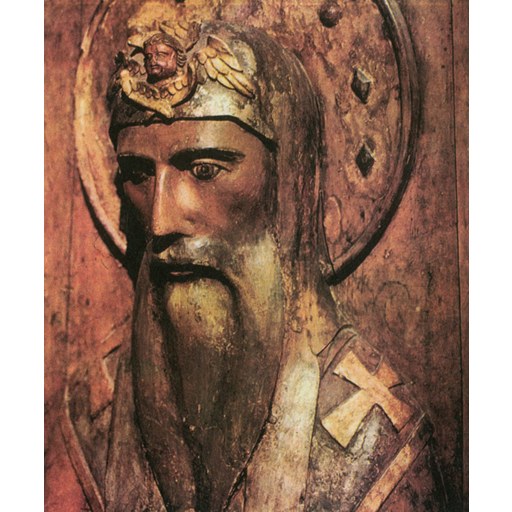
Unknown authorUnknown author
License: CC BY-SA 4.0
Theognostus
Saint- Life Span
- d. 1353
- Feast Day
- 14 March
- Gender
- male
- Church
- Catholic
Places
Relics & Where to Venerate
Location unknown
The bodily remains of Theognostus are a first-class relic. Venerated at Dormition Cathedral.
Roles & Family
Canonization
Biography
Theognostus, often called Theognostus the Greek, was a Byzantine hierarch who served as Metropolitan of Kiev and all Rus' from 1328 until his death in 1353. He was a Greek by birth and a native of Constantinople, formed in the monastic and ecclesiastical world of the Palaiologan capital. After Metropolitan Peter died in 1326, the Patriarchate of Constantinople appointed Theognostus to the vacant see, continuing the long-standing practice of sending Greek metropolitans to govern the church of Rus'. He thus became head of a vast canonical territory stretching across the East Slavic lands, even though Kiev itself had long ceased to be the ordinary residence of the metropolitan and political power among the Rus' princes was concentrating in the northeast, above all at Moscow.
Throughout his quarter-century in office Theognostus worked to keep the metropolitanate of Kiev and all Rus' intact under Constantinopolitan jurisdiction and to confirm Moscow as its practical center. He resided chiefly in Moscow, following the precedent of his predecessor, and maintained close relations with the Muscovite grand princes Ivan I Kalita and Simeon Ivanovich. Like other metropolitans of the Mongol period he traveled to the Golden Horde to obtain from the khans yarliks confirming the privileges and tax immunities of the Church. He resisted efforts, associated with the Grand Duchy of Lithuania and with Galician-Volhynian interests, to split off a separate metropolitanate for Orthodox populations living under Lithuanian or western Rus' rule. Imperial and patriarchal acts issued at Constantinople in the 1340s, in the time of John VI Kantakouzenos, upheld the unity of his see against those attempts at fragmentation.
Theognostus was a firm administrator and a loyal representative of the mother church in Constantinople. Chronicle tradition and later accounts remember him as collecting the canonical dues owed to the patriarchate, a policy sometimes resented in Rus' but consistent with his understanding of metropolitan duty. He took part in the ecclesiastical life of Moscow, consecrating churches and clergy, and he advanced Alexis of Moscow, whom he consecrated bishop of Vladimir and who succeeded him as metropolitan. Historical sources for his inner life and for the years before his appointment are meager; almost everything that can be said with confidence belongs to his public activity as recorded in Rus' chronicles, documents of the Horde, and the acts of the Patriarchate of Constantinople.
Theognostus died in Moscow on 11 March 1353, during the same outbreak of plague—the Black Death—that killed Grand Prince Simeon and several members of the princely house. He was buried in the Cathedral of the Dormition in the Moscow Kremlin, near Metropolitan Peter. The Russian Orthodox Church venerates him as a saint. His principal feast is kept on 14 March, and he is also commemorated with the synaxis of Moscow hierarchs. His relics remain associated with the Dormition Cathedral. Beyond these outlines of office, diplomacy, death, and later veneration, many personal details, including the year of his birth, are not preserved in the surviving sources.