Thomas Woodhouse is a blessed of the Catholic Church (d. 1573). Thomas Woodhouse's feast day is celebrated on 19 June.
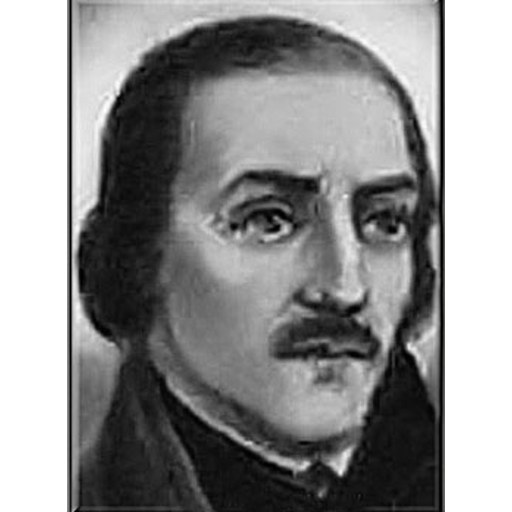
unknown
License: CC BY-SA 4.0
Thomas Woodhouse
Blessed- Life Span
- d. 1573
- Feast Day
- 19 June
- Gender
- male
- Church
- Catholic
Places
Roles & Family
Religious Information
Canonization
Biography
Thomas Woodhouse was an English Catholic priest and Jesuit executed for his faith in the reign of Elizabeth I. He was born in Lincolnshire in the sixteenth century; neither the year nor a more precise place of birth is preserved in the historical record. He belonged to the diocese of Lincoln and was ordained priest in 1558, in the last year of the reign of Queen Mary I, when Catholicism had been restored as the religion of the English state. The following year Elizabeth I came to the throne and Parliament enacted the Elizabethan religious settlement, which re-established royal supremacy over the Church of England and made the Roman Mass and papal jurisdiction unlawful. Like many priests ordained under Mary, Woodhouse then faced the choice of conforming or of living as a recusant. He did not conform. For a time he supported himself as a private tutor rather than exercising a public cure of souls.
In 1561 he was arrested on a charge of recusancy—refusal to attend the statutory services of the Church of England—and was committed to the Fleet Prison in London. He remained there for more than twelve years, one of the longer recorded imprisonments among the Elizabethan Catholic clergy. During this confinement he continued to identify himself as a Catholic priest. Toward the end of his time in prison he asked to be received into the Society of Jesus and was admitted to the order while still a captive. The English Jesuit mission proper is usually dated from the arrival of Edmund Campion and Robert Persons in 1580; Woodhouse’s reception therefore belongs to an earlier, informal stage of Jesuit association with the English Catholic remnant.
In 1572, still a prisoner, Woodhouse wrote to William Cecil, Lord Burghley, the queen’s principal secretary, calling on him to persuade Elizabeth to submit to the pope and to restore the Catholic religion in England. The government treated the letter as an overt act of treason, since it implied denial of the royal supremacy. Woodhouse was brought from prison to trial in June 1573 and was condemned for high treason. The penalty for that offence was hanging, drawing, and quartering.
On 19 June 1573 he was executed at Tyburn, then the principal place of public execution for those convicted of treason in London. Pope Leo XIII beatified him on 29 December 1886, together with a group of other men and women who had suffered for the Catholic faith in England and Wales in the sixteenth and seventeenth centuries. Woodhouse was not among the forty martyrs of England and Wales canonized by Pope Paul VI in 1970, and he remains in the rank of Blessed. His liturgical commemoration is on 19 June. Beyond the outline of his ordination, long imprisonment, Jesuit vocation, letter to Burghley, trial, and death, the surviving sources yield little further personal detail.