Torgil is a saint of the Catholic Church (d. 1306).
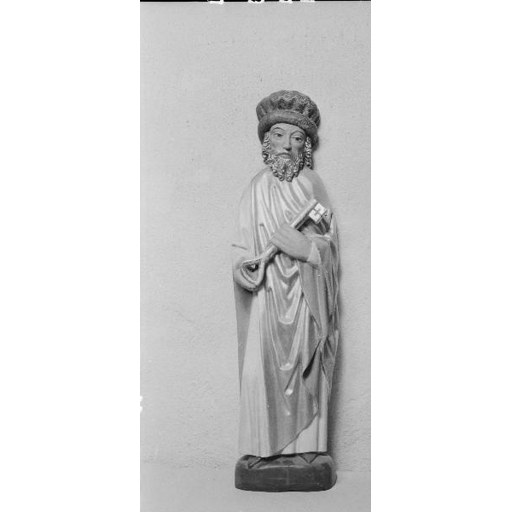
Nils Lagergren
License: Public domain
Torgil
Saint- Life Span
- d. 1306
- Gender
- male
- Church
- Catholic
Places
Roles & Family
Biography
Torgils Knutsson (also rendered Torgil or Torkel Knutsson) was a Swedish knight and marshal who lived in the late thirteenth and early fourteenth centuries. Reliable contemporary sources do not record the year or place of his birth, and details of his parentage and youth remain unknown. He belonged to the high nobility of the medieval Swedish kingdom and rose to the office of marsk, or marshal of the realm, making him one of the principal military and political officers under King Birger Magnusson.
In the 1290s Torgils directed Swedish expansion in the eastern Baltic. He is credited with leading the expedition of 1293 that established the fortress of Viborg (Viipuri) on the Karelian Isthmus, an event conventionally associated with the Third Swedish Crusade. The castle served both as a defensive work against Novgorod and as a base for the extension of Swedish and Latin Christian influence among the Karelians. Torgils’s activities in Finland and Karelia formed a significant chapter in the medieval Swedish presence in the region.
Torgils Knutsson’s family connections linked him to the royal house. His daughter Kristina Torgilsdotter married Duke Valdemar Magnusson, brother of King Birger. Despite this alliance, growing tensions between the king and his brothers, together with opposition from other magnates, led to Torgils’s downfall. He was arrested in late 1305 or early 1306, tried, and executed by beheading in Stockholm on 10 February 1306.
The marshal’s death weakened King Birger’s position and formed part of the sequence of events that produced further conflict among the sons of Magnus Ladulås. Torgils appears in the fourteenth-century Swedish rhymed chronicle Erikskrönikan, which narrates the political struggles of the period. He was a lay nobleman, not a member of a religious order, and he has never been the object of a cult, beatification, or canonization. Surviving records confirm that he was married and had at least one child, but they do not preserve the name of his wife or further particulars of his private life.