Tudglid is a saint of the Catholic Church. Tudglid is the patron saint of Penmachno.
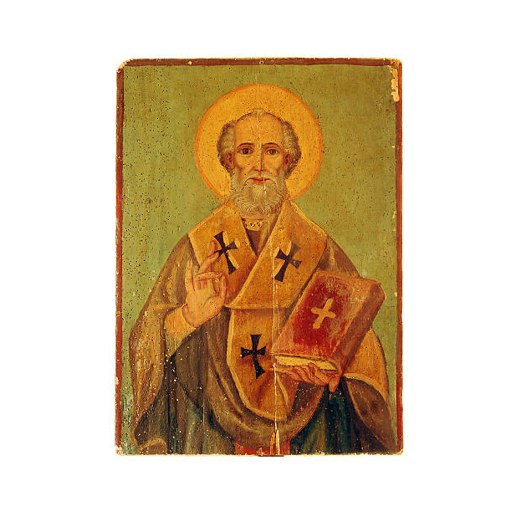
https://istockphoto.com/illustrations/saint-portrait
License: unknown
Tudglid
Saint- Gender
- male
- Church
- Catholic
Places
Roles & Family
Patronage
Penmachno
Biography
Tudglid, whose name also appears in medieval and later sources as Tudclud, Tudglyd, Tudclyd and Tyddyd, is an obscure Welsh saint of the early Middle Ages, conventionally assigned to the sixth century. Later genealogical tracts, especially versions of Bonedd y Saint, present him as one of the sons of Seithenyn (Seithennin), the figure of legend who was held responsible for the drowning of Cantre'r Gwaelod, the Lowland Hundred said once to have occupied part of Cardigan Bay. After the inundation, the tradition relates, Seithenyn's sons embraced the religious life. Alongside his brothers Gwynhoedl, Merin and Tudno, Tudglid is thus numbered among the saints who, according to medieval Welsh memory, emerged from that catastrophe and established churches in Gwynedd.
The only cult site securely linked to him is the church of Penmachno in the upper Conwy valley, in historic Caernarfonshire (now Conwy county borough) in north-west Wales. The medieval parish church there is dedicated to Saint Tudclud, and local tradition regards him as its founder. Penmachno lies in a mountainous district of Snowdonia; the survival of the dedication, together with a group of early inscribed stones from the vicinity that attest Christian burial and Latin literacy in the fifth and sixth centuries, is consistent with an early ecclesiastical foundation, although none of those stones names Tudglid himself. No contemporary biography or miracle collection exists. He is absent from the earliest Irish martyrologies and from the principal continental calendars, and his memory is preserved almost exclusively by the place-name and church dedication and by the late genealogies.
Virtually nothing else about his life can be verified from sources that a historian would regard as reliable. No year of birth or death is recorded, nor any place of birth or burial beyond the general association with Gwynedd and with the legendary drowned lands of the west. There is no evidence of episcopal office, of membership in a later religious order, or of a spouse or children. Like the great majority of early Welsh saints, he was never the subject of a papal canonization; veneration remained local and was never widely diffused. He must be distinguished from Saint Tudno of the Great Orme (Llandudno), another son of Seithenyn in the same tradition, and from the female saint Tydfil (Tudful) of Merthyr Tydfil, a daughter of Brychan Brycheiniog.
The wide variation in the spelling of his name reflects both the instability of early Welsh orthography and the scarcity of early written witnesses. Modern scholarship on the age of the saints in Wales treats figures such as Tudglid as important evidence for the density of local cults in post-Roman western Britain, while stressing that their biographies as found in medieval tracts are constructions of a much later period and cannot be used as straightforward historical narrative. The saint of Penmachno therefore remains a name attached to a place and to a cluster of legends, rather than a person whose career can be reconstructed in detail.