Tudwen is a saint of the Catholic Church. Tudwen is the patron saint of Llandudwen.
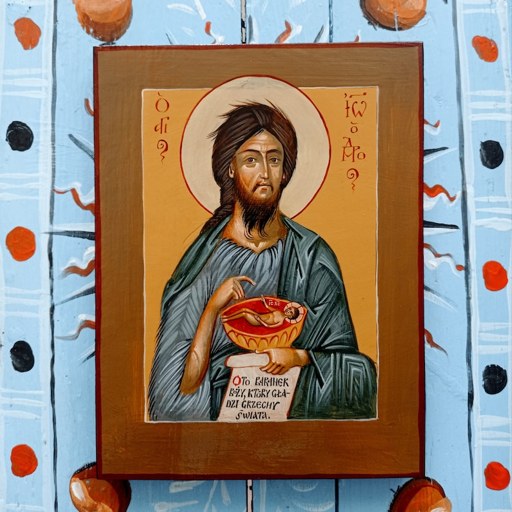
https://www.etsy.com/uk/listing/1518487637/saint-john-the-baptist-picture-icon
License: unknown
Tudwen
Saint- Gender
- female
- Church
- Catholic
Places
Roles & Family
Patronage
Llandudwen
Biography
Saint Tudwen is an early medieval Welsh saint of whom almost nothing can be established from contemporary or near-contemporary sources. Her cult is known principally from the dedication of the church of Llandudwen on the Llŷn Peninsula in Gwynedd, north-west Wales. The Welsh place-name, combining llan (a consecrated enclosure or church) with the personal name Tudwen, indicates that a holy person of that name was commemorated at the site by the time the toponym was formed, most probably in the early Middle Ages. No vita, early martyrology, or inscription supplies an independent biography, and she is therefore known almost exclusively through later tradition and through that single church dedication.
Conventionally she is assigned to the fifth or sixth century, the era in which later medieval tradition placed the majority of the Welsh saints. That dating remains conjectural. Antiquarian and genealogical texts of the later Middle Ages occasionally listed Tudwen among the numerous children of Brychan Brycheiniog, a figure around whom a large family of saints was constructed in Welsh tradition. Modern historians regard such pedigrees as literary and ecclesiastical constructs rather than as reliable family history; they do not constitute evidence that Tudwen was in fact a daughter of Brychan or that she belonged to any particular royal or saintly kindred. Her parentage, birthplace, and the manner and place of her death are unknown.
The parish church of St Tudwen at Llandudwen is a modest medieval structure, later restored, standing in an isolated rural location near the northern shore of Llŷn. It is the sole certain centre of her veneration. There is no record of a translation of relics, of a secondary cult elsewhere in Wales or Brittany, or of a liturgical feast that was widely observed in the early medieval period. Later calendars and antiquarian compilations have assigned various October dates to her memory, but these notices are late and inconsistent and cannot be treated as ancient. She is uniformly presented as a woman, in accordance with the feminine ending of her name. No source describes her as a member of a named monastic order, as a wife, or as a mother, nor did she occupy any patriarchal or papal office.
In the wider landscape of Celtic hagiography, Tudwen belongs to the large group of local saints whose existence is inferred from church dedications and place-names rather than from narrative texts. The survival of her church through the Middle Ages and into the modern period shows that a local cult persisted, but it did not generate the kind of written legend that would allow a detailed biography to be written. Any account of her life beyond the fact of that local veneration would exceed the evidence.