Tytus of Kyiv is a venerable of the Catholic Church. Tytus of Kyiv's feast day is celebrated on 27 February.
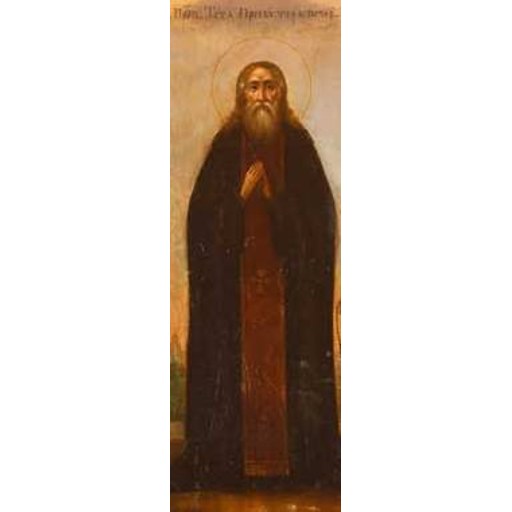
Unknown monk
License: Public domain
Tytus of Kyiv
Venerable- Feast Day
- 27 February
- Gender
- male
- Church
- Catholic
Places
Relics & Where to Venerate
Location unknown
The bodily remains of Tytus of Kyiv are a first-class relic. Venerated at Kyiv Pechersk Lavra.
Roles & Family
Religious Information
Biography
Tytus of Kyiv, known in East Slavic hagiography as Saint Titus the Presbyter of the Caves, was an Eastern Orthodox hieromonk of the Kyiv Pechersk Lavra in Kievan Rus' during the twelfth century. No reliable source preserves his birth year, birthplace, or family. The principal witness to his life is the Kyiv Caves Patericon, a monastic narrative collection put together in the early thirteenth century by Bishop Simon of Vladimir and the monk Polycarp. In that tradition he appears as a priest serving the brotherhood of the Caves monastery, which Saints Anthony and Theodosius had founded in the eleventh century and which followed a Studite form of cenobitic life. His memory is attached to the monastery’s Near Caves, where his relics were later shown, and to a cautionary account of anger and unforgiveness that became one of the Patericon’s best-known episodes. Precise civil dates for his death are not given in the early text; later handbooks sometimes print approximate years, but those figures are not securely verified and should not be treated as established fact.
According to the Patericon, Tytus and a deacon named Evagrius had once been close spiritual friends. Enmity then arose between them, which the narrative ascribes to demonic instigation, and the two men refused even the ordinary courtesies of monastic worship. They would not look at one another, nor would they offer incense toward each other during the services. Other monks repeatedly urged them to be reconciled, without success. The story presents this prolonged rancor inside a community dedicated to repentance as a grave spiritual danger rather than a merely private quarrel, and it is told as a lesson for the brotherhood as a whole.
Tytus later fell into a grave illness and, believing himself near death, sent for Evagrius to ask forgiveness. Evagrius refused, declaring that he would not forgive Tytus in this age or in the age to come. The brethren forcibly brought the deacon to the sick man’s cell. Tytus rose as best he could, fell at Evagrius’s feet, and begged pardon; Evagrius answered with the same hard words. At that moment, the narrative says, Evagrius collapsed and died, his body remaining so rigid that the monks could neither close his mouth nor cross his arms, while Tytus was immediately restored to health. Tytus afterwards described a vision: angels had withdrawn from him because of the unresolved hatred, demons had rejoiced, and when he sought reconciliation an angel struck Evagrius and raised Tytus up. The episode was remembered in the Lavra as a warning against dying in unforgiveness.
After his recovery Tytus is said to have lived in marked humility and peace with the brotherhood until his death. He came to be venerated among the Fathers of the Near Caves. His relics rest in the Anthony Caves of the Kyiv Pechersk Lavra in Kyiv. In the Orthodox liturgical calendar he is commemorated on 27 February, and again with the synaxis of the venerable fathers of the Near Caves (commonly 28 September in the older calendar). Later menologia and synaxaria of the East Slavic churches transmitted his story. There is no single well-documented act of papal or patriarchal canonization comparable to later formal processes, and no historically verified list of particular patronages is attached to his name. The Patericon remains the only substantial narrative source; birthplace, family, and exact years are not preserved. A second, far more obscure monk of the same name, Titus the Soldier of the Far Caves, is also commemorated in some calendars, but the Patericon tale of the priest and the deacon is the tradition that belongs to Tytus the presbyter of Kyiv.