Uladzimir Chiraska is a saint of the Eastern Orthodox Church.
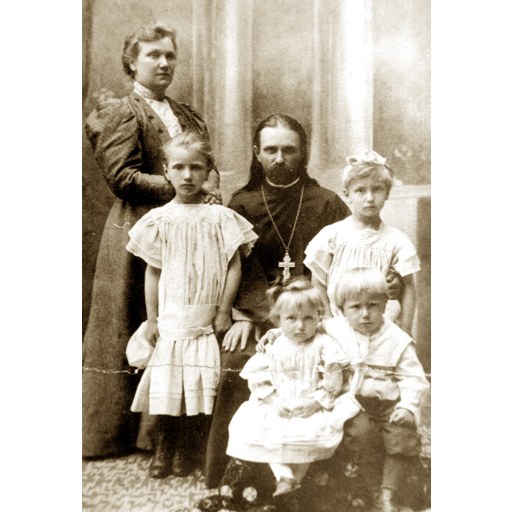
невядомы
License: Public domain
Uladzimir Chiraska
Saint- Gender
- male
- Church
- Eastern Orthodox
Places
Roles & Family
Biography
Uladzimir Chiraska is an obscure figure whose life is not documented in the major Western biographical dictionaries, martyrologies, or standard church histories available for verification. The given name Uladzimir is the Belarusian form of Vladimir and is borne by men; the surname Chiraska (also rendered in Latin script from Belarusian or Russian Cyrillic) points to a Belarusian onomastic context in Eastern Europe. The Wikidata identifier Q110966514 indicates that an item for this name exists in that knowledge base, but that identifier alone does not supply a birth year, death year, place of origin, or public office that can be independently confirmed from widely cited historical sources. No reliable account was found that would allow a birth year to be stated, and an office-taking date must not be substituted for a birth date.
Because the subject does not appear among the bishops of Rome, the Coptic popes of Alexandria, or the patriarchs and catholicoi of the Eastern Orthodox, Oriental Orthodox, or Church of the East communions, those titles cannot be attached to him. Likewise, no feast day, patronage, beatification, or canonization is recorded in the Roman Martyrology, the Orthodox synaxaria, or comparable liturgical calendars that could be checked. Whether he belonged to a religious order, married, or had children is not established in sources that meet a historian’s standard of verification; those fields are therefore left unset rather than inferred from the name or from analogy with other Belarusians.
The broader setting in which a Belarusian named Uladzimir might have lived in the nineteenth through twenty-first centuries includes the religious plurality of the Belarusian lands—Eastern Orthodoxy under the Moscow or, at times, autocephalous jurisdictions, Roman Catholicism of the Latin rite, and the smaller Belarusian Greek Catholic community—as well as the Soviet period of official atheism and the post-1991 national and ecclesiastical revival. None of that background, however, can be tied to Chiraska without primary evidence such as parish registers, diocesan directories, civil records, or contemporary press. Assigning him to a particular diocese, monastery, political movement, or literary circle would be speculation.
Historians working on little-known Belarusian individuals typically turn to national encyclopedias, regional archival fonds, church almanacs, and Belarusian-language periodicals. Until such materials are cited and corroborated, the biographical record for Uladzimir Chiraska remains incomplete. The cautious course is to record only what can be verified, to leave dates and places blank when they cannot, and to refrain from constructing a hagiographic or official career that the sources do not support. Further research in those specialized collections would be required before a fuller life could be written.