Ulrich of Zell is a saint of the Catholic Church (1029 - 1093). Ulrich of Zell's feast day is celebrated on 14 July.
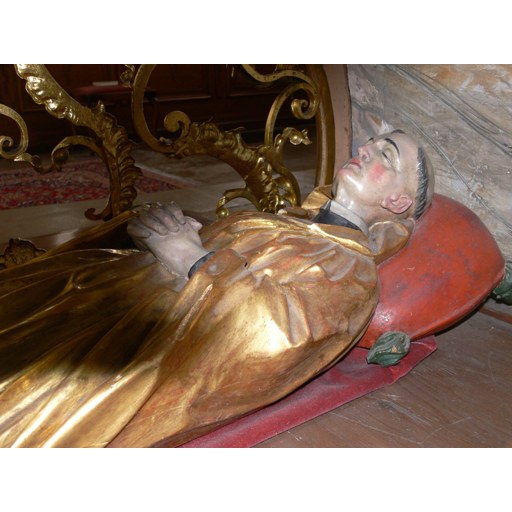
Matthias Faller
License: CC BY 3.0
Ulrich of Zell
Saint- Life Span
- 1029 - 1093 (age 64)
- Feast Day
- 14 July
- Gender
- male
- Church
- Catholic
Places
Roles & Family
Religious Information
Canonization
Biography
Ulrich of Zell, also known as Ulrich of Cluny, Ulrich of Ratisbon, or Wulderic, was an eleventh-century Cluniac Benedictine monk, prior, monastic writer, and saint. He was born in 1029 at Regensburg (then commonly called Ratisbon) in Bavaria, of a noble family connected with the Salian imperial milieu. He received his early education at the Benedictine abbey of Saint Emmeram in his native city. As a youth he served as a page at the court of Emperor Henry III and Empress Agnes of Poitou. After a journey that took him to Rome, he entered the abbey of Cluny in Burgundy during the abbacy of Saint Hugh of Cluny and made his monastic profession in the early 1050s.
Following ordination to the priesthood, Ulrich held several offices in the Cluniac network. He served as prior of the house of Payerne (Peterlingen) in the Kingdom of Burgundy and as spiritual director or confessor to the nuns of the Cluniac priory of Marcigny. Conflicts with local secular powers and the burdens of administration led him to resign these charges and return to Cluny. Abbot Hugh then sent him into the German kingdom to further Cluniac observance. An initial settlement at Grüningen in the Breisgau proved unsatisfactory; Ulrich thereafter founded a priory at Zell in the Black Forest, in the region of present-day St. Ulrich im Schwarzwald near Freiburg im Breisgau. The community later came to bear his name.
At Zell, Ulrich established regular Cluniac life and was remembered for personal austerity, hospitality, and relief of the poor, especially in times of scarcity. In later years, at the request of Abbot William of Hirsau, he compiled a detailed account of the liturgical and conventual customs of Cluny, the Consuetudines Cluniacenses, which remains a principal narrative source for Cluniac practice in the second half of the eleventh century. He lost his sight in old age but continued to govern his community. Ulrich died at Zell on 10 July 1093 and was buried in the priory church.
A local cult developed at his tomb and within the Cluniac world. He is commemorated as a saint in the Roman Martyrology and in Benedictine calendars on 14 July. Traditional accounts state that Pope Innocent II confirmed his cult, or canonized him, in 1134. He is distinct from Saint Ulrich of Augsburg, the tenth-century bishop whose cult is far more widespread. Surviving evidence for Ulrich of Zell consists mainly of Cluniac and Hirsau-related texts, later hagiography, and the customs book associated with his name; many anecdotal details in later lives cannot be independently verified.