Ursus of Aosta is a saint of the Catholic Church (d. 529). Ursus of Aosta's feast day is celebrated on 1 February. Ursus of Aosta is the patron saint of Aosta;Cogne.
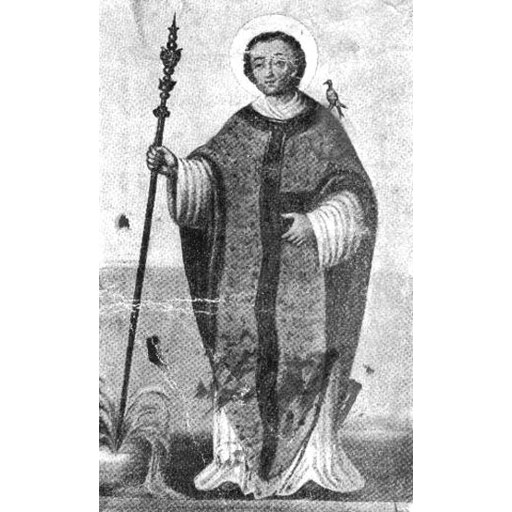
License: Public domain
Ursus of Aosta
Saint- Life Span
- d. 529
- Feast Day
- 1 February
- Gender
- male
- Church
- Catholic
Places
Roles & Family
Patronage
Aosta;Cogne
Canonization
Biography
Ursus of Aosta, known in Italian as Sant'Orso and in French as Saint Ours, was a sixth-century Christian priest and archdeacon whose memory is bound to the city of Aosta in the western Alps. No contemporary chronicle or inscription records his birth, parentage, or early career; almost everything that is repeated about him comes from later hagiographical tradition. That tradition describes him as a native of Ireland who came as a missionary into the Aosta valley and joined the cathedral clergy, eventually holding the office of archdeacon. His death is conventionally placed on 1 February in or around the year 529. He was buried at a church dedicated to Saint Peter that stood just outside the Roman walls of Aosta. That church later took his name and developed into the Collegiate Church of Saints Peter and Ursus, still called the Collegiata di Sant'Orso.
The episode that defines his legend is his refusal to accept Arian episcopal authority. In the early sixth century the Aosta region lay within the sphere of Arian Burgundian and Ostrogothic power, and an Arian bishop was imposed on the local see. Ursus, remaining attached to Nicene orthodoxy, would not submit to that bishop. Together with other clergy who shared his stance he withdrew from the cathedral and established a community at the extramural church of Saint Peter. From that church he is said to have continued pastoral work among the people of the valley. Later accounts stress his charity toward the poor and his firmness against heresy. He is not associated in the sources with any named monastic order; his life is presented as that of a secular priest and archdeacon, without record of a wife or children.
After his death the tomb at Saint Peter's became the centre of a local cult. The church was rebuilt and enlarged in the early Middle Ages. In the Romanesque period it received a cloister whose historiated capitals are among the finest in the Alps, together with wall paintings of Ottonian date, and a community of canons was established there. The collegiate complex remains the principal monument linked to the saint, and his relics have continued to be venerated in that church. The cult spread through the Valle d'Aosta and into neighbouring mountain communities.
Ursus is honoured as a patron of Aosta and of the Alpine commune of Cogne, which preserves a church under his dedication. His liturgical feast is kept on 1 February. On 30 and 31 January Aosta holds the Fiera di Sant'Orso, a traditional fair of regional handicrafts, especially woodcarving, tied to the vigil of his feast and still a major civic and religious occasion in the valley. Because the written Lives are late and legendary in character, historians treat the Irish origin, the precise year of death, and many narrative details as unverified tradition, while accepting that a sixth-century orthodox cleric named Ursus was buried at Aosta and that his tomb generated an early and enduring cult.