Ursus of Auxerre is a saint of the Catholic Church (d. 508). Ursus of Auxerre's feast day is celebrated on 30 July.
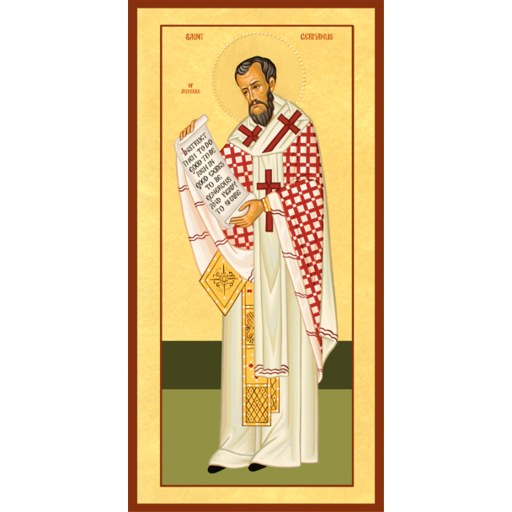
https://easternchristiansupply.biz/index.php/ecs/st-germanus-of-auxerre.html
License: unknown
Ursus of Auxerre
Saint- Life Span
- d. 508
- Feast Day
- 30 July
- Gender
- male
- Church
- Catholic
Places
Roles & Family
Biography
Ursus of Auxerre (known in French as Saint Ours) was a bishop of Auxerre in late antique Gaul in the early sixth century. Almost nothing can be established about his birth, family, or education. Later diocesan tradition, preserved above all in the ninth-century Gesta pontificum Autissiodorensium (Deeds of the Bishops of Auxerre), presents him as a hermit who was living in retirement when the see fell vacant. According to that account, the clergy and people of Auxerre sought him out and compelled him, against his own wish to remain a recluse, to accept episcopal office. No contemporary vita or letter of Ursus survives, and the hermit-to-bishop motif is a common hagiographical pattern; it cannot be independently verified, but it is the only narrative of his earlier life that the medieval sources supply.
The same episcopal catalog numbers Ursus as the ninth bishop of Auxerre and assigns him a short tenure traditionally dated from about 502 until his death in 508. Those years rest on later compilations rather than on documents from his own lifetime, and the precise chronology of the earliest bishops of Auxerre remains uncertain. In the first decade of the sixth century Auxerre lay in northern Burgundy, a region then passing from Burgundian into Frankish control in the wake of Clovis I’s victories, including the Battle of Vouillé in 507. Ursus would have governed a Christian community still strongly marked by the fifth-century episcopate of Germanus of Auxerre, whose cult and institutions dominated local memory. No sermons, canons, or other writings by Ursus are known, and no contemporary chronicle describes his administration.
His cult is attested principally by local liturgical commemoration and by the Roman Martyrology, which records him on 30 July at Auxerre. Like most saints of late antiquity he was never the subject of a formal papal canonization; recognition came through popular and episcopal cult and is later classified as pre-congregation. The place of his burial is not securely identified in the surviving sources, nor are specific patronages of places, trades, or causes attached to him in the standard martyrologies and diocesan lists. He must be distinguished from other saints of the same name, especially Ursus of Aosta and various Alpine or Irish figures called Ursus or Ours. The historical Ursus of Auxerre remains an obscure figure whose memory was kept alive mainly in the episcopal tradition of Auxerre and in brief martyrological notices.