Václav Drbola is a blessed of the Catholic Church (1912 - 1951).
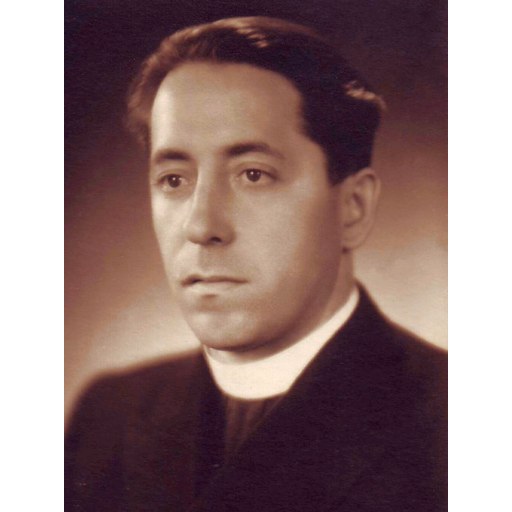
Unknown photographer CZ: Autorem této fotografie je neznámá osoba. EN: Author of this photo is unknown person.
License: Public domain
Václav Drbola
Blessed- Life Span
- 1912 - 1951 (age 39)
- Gender
- male
- Church
- Catholic
Places
Relics & Where to Venerate
Location unknown
The bodily remains of Václav Drbola are a first-class relic. Venerated at Starovičky.
Roles & Family
Canonization
Biography
Václav Drbola was a Czech Roman Catholic priest of the Diocese of Brno who was executed by the communist authorities of Czechoslovakia in 1951 and is venerated as a blessed martyr of the twentieth-century persecution of the Church. He was born on 24 October 1912 in the South Moravian village of Starovičky, then situated in the Margraviate of Moravia within the Austro-Hungarian Empire. He grew up in a Catholic rural environment that, after 1918, formed part of the First Czechoslovak Republic. He received a secondary education and entered priestly formation for the Diocese of Brno. He was ordained to the priesthood in the late 1930s, on the eve of the dismemberment of Czechoslovakia and the wartime occupation of the Czech lands. His early years of ministry therefore coincided with the German Protectorate of Bohemia and Moravia and with the difficult conditions imposed on pastoral work during the Second World War.
After the war he continued in parish assignments in Moravia. Following the communist coup of February 1948, the new regime moved systematically against the Catholic Church: religious orders were suppressed, bishops were interned, Catholic schools and associations were closed, and clergy were required to seek state permission for ministry. A state-sponsored movement sought to create a compliant national church. Drbola remained a diocesan pastor rather than a political activist, but ordinary fidelity to the bishop and to Rome was itself treated as disloyalty. By about 1950 he was serving as parish priest or parish administrator at Babice in the Třebíč district, a small highland community on the Bohemian-Moravian border.
The Babice case of 1951 became a landmark of Stalinist justice in the Czech countryside. On 2 July 1951 three communist local officials were shot and killed in Babice. State Security presented the crime as the fruit of an armed conspiracy of rural opponents of the regime and Catholic priests supposedly directed against the state. Later investigation and the post-1989 rehabilitation of the condemned have established that the principal clerical defendants, including Drbola, had already been arrested before the shooting took place, and that the trial narrative was assembled to justify exemplary sentences. The affair allowed the regime to strike at village Catholicism and to warn the rural population against any independence from the party.
Drbola was tried in a rapid proceeding, sentenced to death, and hanged on 3 August 1951 in Jihlava. He was thirty-eight years old. Other defendants in the related Babice trials, among them the priest Jan Bula, were likewise executed in 1951–1952. The priest’s body was disposed of according to the secretive practice used for political prisoners; a public Catholic funeral was impossible. After the Velvet Revolution the Czechoslovak and subsequently Czech courts annulled the verdicts. The Diocese of Brno introduced his cause of beatification, arguing that he had been killed in hatred of the faith as part of a campaign to subjugate the Church. Pope Francis confirmed the martyrdom, and in 2024 Václav Drbola was beatified together with Jan Bula. He is commemorated in the Czech Republic as one of the clerical martyrs of the communist era, a parish priest whose death illustrated the cost of remaining with the imprisoned bishops and with Rome.