Venantius Fortunatus is a saint of the Catholic Church. Venantius Fortunatus's feast day is celebrated on 14 December.
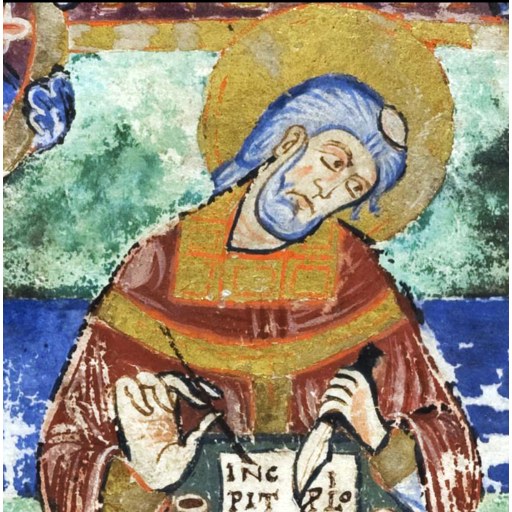
Unknown authorUnknown author
License: Public domain
Venantius Fortunatus
Saint- Feast Day
- 14 December
- Gender
- male
- Church
- Catholic
Places
Roles & Family
Biography
Venantius Honorius Clementianus Fortunatus was a Latin poet, hymnodist, hagiographer, and bishop whose life and writings belong to sixth-century Italy and to the Merovingian kingdoms of Gaul. He was born in the first half of the sixth century at Duplavis, in Venetia near Treviso in northern Italy. Almost nothing is known of his family. He received a classical education at Ravenna, still a major centre of Roman administration and letters, studying grammar, rhetoric, and law. In the mid-560s he left Italy for the Frankish lands. Later tradition explained the journey as a pilgrimage of thanksgiving to the shrine of Saint Martin at Tours after the healing of an eye ailment; the insecurity of Italy on the eve of the Lombard invasion may also have contributed. He travelled through Gaul composing panegyrics and occasional verse for kings, bishops, and aristocrats, and thereby obtained hospitality and patronage.
By about 567 he had settled at Poitiers, where the former Frankish queen Radegund, a Thuringian princess who had withdrawn from her marriage to King Chlothar I, had founded the monastery of the Holy Cross. Fortunatus formed a lasting spiritual friendship with Radegund and with Agnes, the abbess of the house. He lived in Poitiers as chaplain and advocate of the community and addressed to the two women a large body of verse, ranging from light poems about gifts of food and flowers to more solemn religious compositions. When a relic of the True Cross, sent by the Byzantine emperor Justin II and the empress Sophia, arrived at the monastery, he wrote the hymns Vexilla regis prodeunt and Pange, lingua, gloriosi proelium certaminis. Both entered the liturgy of the Latin Church and remain among the best-known early medieval hymns.
His surviving works are among the most important literary remains of the Merovingian age. They include a verse Life of Saint Martin in four books, prose and verse lives of other saints (including Radegund), epitaphs, consolatory poems, descriptions of churches and villas, and eleven books of miscellaneous occasional poetry, with further pieces gathered later. Fortunatus wrote chiefly in classical metres, especially the elegiac couplet and the hexameter, and combined rhetorical training with Christian themes, wordplay, and a distinctive personal warmth. He is commonly regarded as a transitional figure in whom the last phase of antique Latin literary culture meets the Latin literature of the medieval West.
He was ordained priest while resident at Poitiers. Late in the sixth century, after the death of Bishop Plato, he became bishop of Poitiers. The precise years of his consecration and of his death are not recorded; he died at Poitiers in the early seventh century. He was venerated locally as a saint. His feast is kept on 14 December. Later readers have valued him both as a witness to Merovingian court and ecclesiastical life and as the author of hymns that remained in liturgical use for many centuries.