Venerable John the Hermit is a venerable of the Catholic Church.
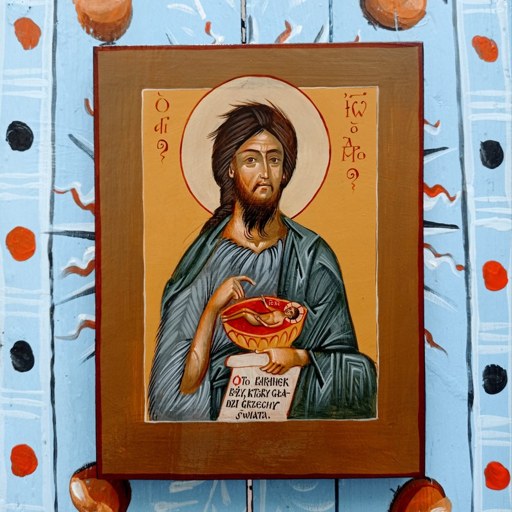
https://www.etsy.com/uk/listing/1518487637/saint-john-the-baptist-picture-icon
License: unknown
Venerable John the Hermit
Venerable- Gender
- male
- Church
- Catholic
Roles & Family
Biography
Little can be established with certainty about the life of Venerable John the Hermit, an ascetic commemorated in the Armenian Christian tradition. No contemporary chronicles, inscriptions, or detailed hagiographical vita survive that would permit historians to assign him to a particular century or to identify his place of birth or death. He is known to posterity almost exclusively through his designation as a hermit, indicating that he embraced the solitary life of prayer, fasting, and spiritual combat that characterized much of early and medieval Armenian monasticism.
The eremitical movement in Armenia developed in the wake of the kingdom's conversion to Christianity in the early fourth century and continued through subsequent centuries of political upheaval. Hermits typically sought remote caves, mountain gorges, or isolated cells far from urban centers, where they could pursue hesychastic prayer and extreme asceticism. John the Hermit would have belonged to this current of spirituality, though no specific monastery, cave, or region can be reliably linked to him on the basis of existing evidence. Later tradition simply preserves his memory as one of the venerable fathers whose hidden life of holiness contributed to the spiritual patrimony of the Armenian people.
Because John lived as a hermit, it may be inferred that he observed celibacy and had no family of his own, in keeping with the monastic ideal of complete renunciation. There is no indication that he ever held ecclesiastical office such as bishop, catholicos, or patriarch, nor that he was involved in the theological controversies that periodically agitated the Armenian Church. His cult does not appear to have generated a widespread patronage or a fixed feast day that is prominently recorded in accessible liturgical calendars, suggesting that veneration remained relatively localized.
The scarcity of information is typical of many lesser-known saints of the Oriental Orthodox world, whose stories were often transmitted within particular monastic communities and were vulnerable to loss during periods of invasion, forced conversion, or manuscript destruction. Modern hagiographers and historians therefore treat Venerable John the Hermit with appropriate caution, recognizing him as a genuine figure of Armenian piety while declining to fill the gaps in the record with conjecture. His example continues to illustrate the enduring Armenian esteem for the hidden, contemplative life.