Victor Scheppers is a venerable of the Catholic Church (1802 - 1877).
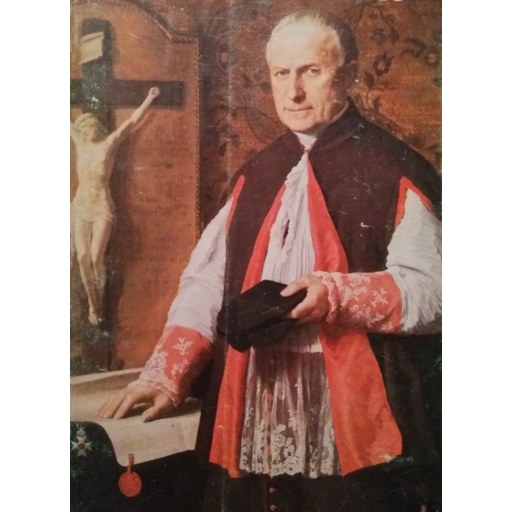
Unknown authorUnknown author
License: Public domain
Victor Scheppers
Venerable- Life Span
- 1802 - 1877 (age 75)
- Gender
- male
- Church
- Catholic
Places
Roles & Family
Religious Information
Biography
Victor Scheppers was born on 25 April 1802 in Mechelen (Malines), in the Low Countries. At the time of his birth the city lay under French Napoleonic administration; after 1815 it belonged to the United Kingdom of the Netherlands, and from 1830 to the independent Kingdom of Belgium. He came from a prosperous local family and received a classical education before entering the seminary of the Archdiocese of Mechelen. He was ordained a priest in 1825 and spent his entire ministry in and around his native city, remaining a diocesan priest rather than joining an older religious order.
The social conditions of early nineteenth-century Belgium, including urban poverty, inadequate schooling for working-class boys, and harsh prison conditions, shaped his priestly work. Scheppers devoted himself to the education of neglected youth and to the pastoral care of prisoners. In order to give this apostolate a lasting form, he founded in 1839 the Congregation of the Brothers of Our Lady of Mercy, also known as the Brothers of Mercy of Mechelen. The brothers undertook teaching, the direction of orphanages and trade schools, nursing of the sick, and ministry in prisons. From its motherhouse in Mechelen the congregation opened further houses in Belgium and, in time, in other countries.
Scheppers served as founder and first superior of the institute while continuing his duties as a priest of the archdiocese. He was named an honorary canon of the metropolitan chapter of Mechelen. He did not become a bishop and is not known as an author of systematic theology; accounts of his life emphasize practical charity, concern for the marginalized, and the organization of a new religious family in the service of education and mercy. He died in Mechelen on 7 March 1877.
A cause for his beatification was introduced in the Roman Catholic Church in the twentieth century. On 16 March 1987 Pope John Paul II declared him Venerable, a recognition of the heroicity of his virtues that stops short of beatification or canonization. He has no feast in the General Roman Calendar and is not assigned official patronages of the kind attached to canonized saints. The congregation he founded continues educational and charitable work.