Victoria of Córdoba is a saint of the Catholic Church (d. 304). Victoria of Córdoba's feast day is celebrated on 17 November. Victoria of Córdoba is the patron saint of Córdoba.
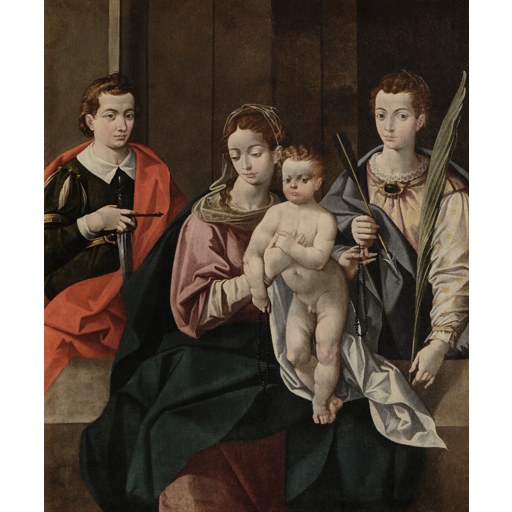
Juan de Peñalosa y Sandoval
License: Public domain
Victoria of Córdoba
Saint- Life Span
- d. 304
- Feast Day
- 17 November
- Gender
- female
- Church
- Catholic
Places
Roles & Family
Patronage
Córdoba
Biography
Victoria of Córdoba is venerated in the Catholic Church as a Christian martyr of the early fourth century. She is commemorated together with Saint Acisclus (Spanish: Acisclo), who in Iberian tradition is described as her brother. Their names are bound to the city of Córdoba—ancient Corduba in the Roman province of Hispania Baetica—where a cult of Acisclus is already attested in the early medieval martyrological tradition. Later calendars and the Roman Martyrology place their passion in the Great Persecution under Diocletian, customarily in 304. No contemporary acta survive, and Victoria’s own biography cannot be reconstructed from independent historical documents; she is known through a later legendary passio and through the liturgical and civic memory of Córdoba.
According to that passio, Victoria and Acisclus belonged to a prominent Christian family of Córdoba and refused to recant when the imperial edicts against Christianity were applied in Baetica. A local governor, named Dion in the Roman Martyrology and in related texts, is said to have had them arrested and tortured. The legend, which resembles other late Spanish passions of doubtful historical detail, recounts failed attempts to destroy them by fire and other torments, followed by execution. Versions differ as to the instruments of death: some speak of arrows for Victoria and beheading for Acisclus; others of the sword or a furnace. These variants illustrate the growth of the story rather than a recoverable sequence of events. The texts present Victoria as a virgin who died for the faith; nothing in the tradition suggests that she married or had children, nor that she belonged to a later religious order.
Critical hagiography has long treated the Cordoban passio as largely unhistorical in its narrative particulars, while accepting that an ancient martyr cult existed in the city. The Hieronymian Martyrology records Acisclus at Córdoba on 17 November, evidence that his feast was known by the time that compilation circulated in the West. Victoria’s name is joined to his in the medieval Spanish tradition and in the Roman Martyrology, which commemorates them as brother and sister. In Visigothic and then Mozarabic Córdoba the memory of the Roman-era martyrs remained part of local Christian identity. A church dedicated to Acisclus existed in the city; after the eighth-century Islamic conquest it was among the churches that continued to serve the Christian population. Ninth-century Cordoban Christians, living under Umayyad rule and producing their own martyrs, still looked back to the earlier Roman witnesses as patrons of the see.
Victoria’s cult is of the ancient, pre-congregational type: she was not the object of a formal papal canonization or beatification in the later canonical sense. Together with Acisclus she is honored as a patron saint of Córdoba. Their joint feast is kept on 17 November. Relics attributed to the two martyrs have been preserved and venerated in Córdoba and, in the course of the Middle Ages, were claimed by other churches as well. Because the written legend is late and stylized, a careful account must distinguish the solid fact of an early Cordoban martyr cult, centered on Acisclus and in time including Victoria, from the unrecoverable details of her life and death. She remains, for the historian, an obscure figure whose enduring importance lies in the liturgy and civic religion of Córdoba rather than in a documented personal biography.