Viljem Savelli is a servant of god of the Catholic Church.
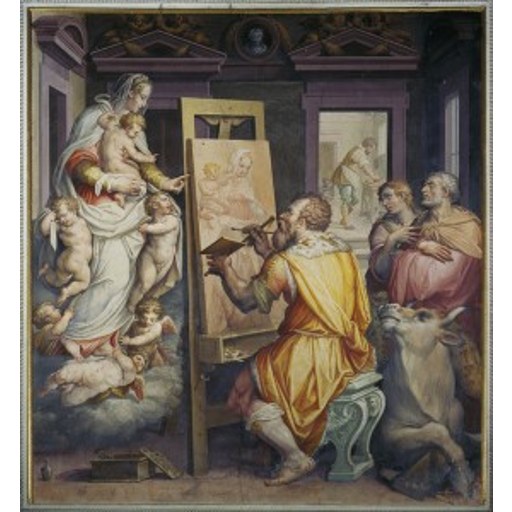
http://www.italianrenaissanceresources.com/units/unit-1/essays/saint-luke-paints-the-virgin-and-child-genealogy-of-an-image/
License: unknown
Viljem Savelli
Servant of God- Gender
- male
- Church
- Catholic
Places
Roles & Family
Biography
Viljem Savelli remains an obscure figure in the historical and hagiographical record. The personal name Viljem is the South Slavic form of William, long used among Slovenes, Croats, and neighboring peoples, while Savelli is the surname of a medieval and early modern Roman princely house. That house rose to prominence in the thirteenth century, giving the Church Pope Honorius IV (Giacomo Savelli) as well as several cardinals, and later held fiefs in the Papal States. Whether this Viljem belonged to a collateral or geographically distant branch of that lineage, or merely bore a homonymous surname, cannot be established from published sources of recognized authority.
No chronicle, episcopal catalogue, necrology, or printed genealogy supplies a verified year of birth or death, a place of origin, or a place of burial. Standard lists of the bishops of Rome and of the Coptic popes of Alexandria contain no such name, nor do the succession lists of the principal Orthodox, Oriental Orthodox, or Church of the East patriarchates. The Roman Martyrology and the principal regional calendars of saints in the South Slavic lands do not assign him a feast, a cult, or a patronage. In the absence of those notices it would be improper to invent dates, titles, or a religious order.
The historical Savelli family is otherwise well documented in Italian and papal historiography, and members of related Italian families did at times serve in Habsburg Inner Austria, in Venetian Istria and Dalmatia, and in other contact zones between the Italian peninsula and the South Slavic world. Such a setting could in principle explain a mixed onomastic form, but no charter, testament, or visitation record has been cited in accessible scholarly literature that would place this particular Viljem in any of those regions. Celibacy, marriage, and offspring are therefore equally unknown.
Until diocesan archives, family papers of the Savelli, or local necrologies are systematically examined and published, the biography of Viljem Savelli must be left largely blank. The present account records only what can be stated with caution: that the name is masculine in form, that no pontifical or patriarchal office is attested, and that no canonization or beatification is known to the ordinary reference works of Catholic and Orthodox hagiography. Honesty about these limits is preferable to conjecture.