Virgin is a saint of the Catholic Church.
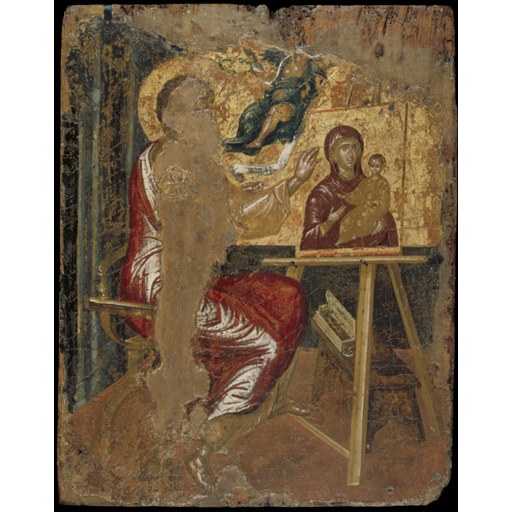
https://www.italianrenaissanceresources.com/units/unit-1/essays/saint-luke-paints-the-virgin-and-child-genealogy-of-an-image/
License: unknown
Virgin
Saint- Church
- Catholic
Roles & Family
Biography
The single word “Virgin” does not identify one historical person. In Christian hagiography it is a title, not a personal name. It is applied above all to Mary, the mother of Jesus, commonly called the Blessed Virgin Mary, and it is also attached to a large class of female saints, especially early martyrs commemorated as “virgin and martyr.” Without a given name, a place of cult, a feast, or another disambiguating mark, no unique life can be verified from reliable sources, and dates, places, patronage, and acts of canonization cannot be filled in without guesswork.
If the intended subject were Mary, the New Testament would be the primary historical witness. The Gospels present her as a Jewish woman of Galilee, betrothed to Joseph, and as the mother of Jesus of Nazareth. They do not record a year of birth or death, nor a birthplace. Nazareth is the setting of the annunciation in Luke; later tradition sometimes names Jerusalem or Sepphoris, but those claims are not established by contemporary evidence. Extra-biblical narratives of her childhood, her parents Joachim and Anne, and her dormition or assumption derive mainly from apocryphal texts such as the Protoevangelium of James and from later liturgical and doctrinal development, not from first-century documentation. She was never “canonized” in the later juridical sense; veneration of her is as old as the Church’s public cult. Whether she had other children is a matter of confessional interpretation of the Gospel “brothers” of Jesus, not a fact that can be settled here as a verified historical field.
The same title covers many other figures. Agnes of Rome, Cecilia, Lucy of Syracuse, Agatha of Sicily, and numerous less well-documented women appear in martyrologies as virgins. Their passiones are often late, legendary, or locally transmitted. Birth years are typically unknown; office-taking or feast dates must not be substituted for them. Some were associated with monastic life in later centuries; others are known only as martyrs of the imperial persecutions. Patronages attached to “the Virgin” in popular devotion usually belong either to Mary (under many titles) or to a named virgin saint, and cannot be listed for an unnamed subject.
Because the query supplies no Wikidata identifier, no encyclopedia article, and no personal name, this record is left blank in every biographical field that requires a verified individual. “Virgin” remains a category of sanctity and a Marian epithet, not a person whose birth, death, burial, order, marriage, or canonization can be stated from the historical record.