Virgin is a saint of the Catholic Church.
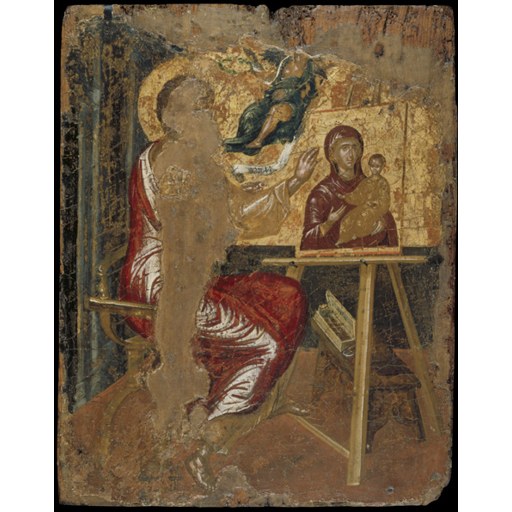
https://www.italianrenaissanceresources.com/units/unit-1/essays/saint-luke-paints-the-virgin-and-child-genealogy-of-an-image/
License: unknown
Virgin
Saint- Church
- Catholic
Biography
The designation “Virgin” does not identify a single, uniquely verifiable historical person. No Wikidata identifier, encyclopedia article, personal name, place of cult, or calendar date was supplied. In Christian hagiography the word is a title (Latin virgo, Greek parthenos), not a proper name that can be matched to one life. Assigning a birth year, death year, city, order, spouse, or patronage to this label would require substituting another figure, which is not permitted when the sources do not support the identification.
From late antiquity onward, martyrologies and liturgical books apply “virgin” to many women, often together with “martyr.” Early examples associated with the Roman imperial period include Agatha of Sicily, Agnes of Rome, Cecilia, and Lucy of Syracuse; later centuries add consecrated virgins and foundresses whose cults are local or regional. Each of these has a distinct legendary cycle, feast, and (where it exists) historical kernel. None is entered in the standard collections simply as “Virgin.” The Blessed Virgin Mary is frequently called “the Virgin” in liturgy and devotion, but she is properly named Mary of Nazareth; even her life, known from the New Testament and later expanded by apocrypha such as the Protevangelium of James, does not yield historically verified years of birth or death, and it cannot be used here without turning the present subject into a different one.
Because the request does not specify which, if any, of these figures is meant, every structured field that depends on a unique identity is left empty. Feast days, patronages of places, professions, illnesses, or groups, and notices of canonization or beatification all belong to particular saints and cannot be aggregated under a generic title without error. No office of pope or patriarch, no religious order, and no documented marriage or children can be attributed to an unnamed “Virgin.”
Readers who seek a biography should supply a personal name, a place, or a feast so that the record can be checked against the Roman Martyrology, the Acta Sanctorum, synaxaria, or other standard collections. Until that disambiguation is given, the cautious procedure is to record only the limits of identification and to prefer blank fields over conjecture.