Virgin is a saint of the Catholic Church.
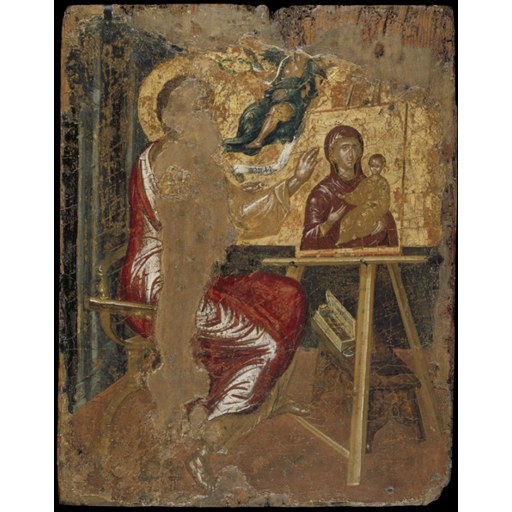
https://www.italianrenaissanceresources.com/units/unit-1/essays/saint-luke-paints-the-virgin-and-child-genealogy-of-an-image/
License: unknown
Virgin
Saint- Church
- Catholic
Biography
The single-word subject Virgin does not identify one historical person. In Christian hagiography the term is a title or epithet, not a unique proper name. It is applied above all to Mary of Nazareth, mother of Jesus; it also labels an entire class of saints (consecrated virgins and virgin martyrs) and sometimes survives as a truncated fragment of a longer dedication. No Wikidata identifier, encyclopedia article, feast, diocese, or fuller name was supplied. Under a rule that forbids guessing, no birth year, death year, place, order, spouse, children, office, feast, patronage, or canonizing authority can be attached to this record.
When Christian sources say the Virgin they most often mean Mary. The canonical Gospels present her as a Jewish woman of Galilee, betrothed to Joseph, who conceives Jesus. They give no birth year, no death year, and no burial place that can be confirmed independently of later tradition. Apocryphal texts such as the Protoevangelium of James add parents named Anne and Joachim, a childhood in or near Jerusalem, and a presentation in the Temple; those details are widely venerated but are not first-century documentary facts. Catholic and Orthodox doctrine holds her perpetual virginity; other Christians read New Testament references to brothers of Jesus as implying later children. Those disputes are theological, not items that can be entered here as verified civil biography. Mary was not Bishop of Rome, not a patriarch, and not a member of a later religious order; she was never formally canonized because her cult is apostolic rather than the product of a medieval or modern process.
A second, very large set of figures in the martyrologies are commemorated as virgin or virgin and martyr: Agatha of Sicily, Agnes of Rome, Lucy of Syracuse, Cecilia of Rome, and many local saints of the Roman, Byzantine, Coptic, and other calendars. Each has a distinct (often legendary) passion, cult, and list of patronages. Male saints are occasionally praised for virginity in the sense of consecrated celibacy, but the standalone calendar title Virgin in the Latin West is overwhelmingly feminine. Merging these lives into one JSON object would be historically false.
Every structured field is therefore left empty. If a complete name, a feast date, a place of cult, or a Wikidata Q-number is provided, a proper hagiographical entry can be written. Until then, Virgin remains a title or a fragment, not a verified individual life.