Virgin is a saint of the Catholic Church.
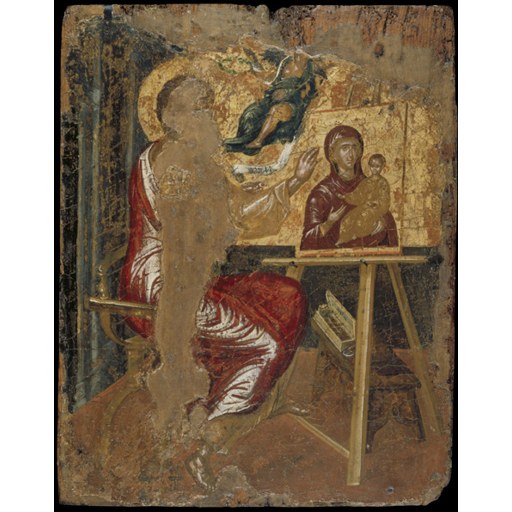
https://www.italianrenaissanceresources.com/units/unit-1/essays/saint-luke-paints-the-virgin-and-child-genealogy-of-an-image/
License: unknown
Virgin
Saint- Church
- Catholic
Biography
The designation “Virgin” does not identify a single, uniquely documented historical person. In Christian hagiography it is a title, not a personal name: it is applied to the mother of Jesus (commonly called the Blessed Virgin Mary or the Theotokos) and to a very large class of female saints commemorated as virgins, often as “virgin and martyr.” Without a given name, a see, a feast, a century, or another disambiguating mark, no individual biography can be verified, and no birth year, death year, birthplace, burial place, or patronage list can be assigned without guessing.
In the New Testament, Mary of Nazareth is the principal figure associated with the title. The Gospels of Matthew and Luke present her as a young Jewish woman of Galilee, betrothed to Joseph, who becomes the mother of Jesus. Those texts do not record her year of birth or death, nor a historically controlled birthplace beyond the later setting of the Annunciation at Nazareth. Extra-canonical works such as the second-century Protoevangelium of James supply later legends (parents named Joachim and Anne; a childhood associated with the Jerusalem Temple), but those details are not independently verified by contemporary historical sources. Christian tradition subsequently developed doctrines and feasts around her (Annunciation, Nativity of Mary, Dormition or Assumption), none of which yields a secure civil date of birth or death.
Apart from Mary, martyrologies and liturgical calendars list hundreds of women under the heading “virgin,” from late antique figures such as Agnes of Rome, Cecilia, Lucy of Syracuse, and Agatha of Sicily, through medieval and early modern foundresses and mystics. Their lives, cults, and patronages are distinct and cannot be collapsed into one record. “Virgin” in that usage signals a remembered state of life—unmarried, often monastic or martyred—rather than a surname or a unique office. It does not imply that the person was a pope or a patriarch, nor does it by itself document a spouse, children, religious order, or canonization process.
Because the subject string supplied here is only “Virgin,” with no Wikidata identifier and no encyclopedia article specified, the cautious historical procedure is to leave every biographical field empty. Filling a birth year from an office-taking date, a legendary hometown, or the biography of Mary or of any one virgin-martyr would be substitution, not verification. A usable hagiographical entry would require at least a personal name and a tradition (for example, “Agnes, virgin and martyr” or “Mary, mother of Jesus”) before dates, places, feast day, and patronages can be responsibly recorded.