Virgin Coletta is a saint of the Catholic Church (1381 - 1447). Virgin Coletta's feast day is celebrated on 6 March. Virgin Coletta is the patron saint of women seeking to conceive;expectant mothers;sick children;infertility;against the death of children.
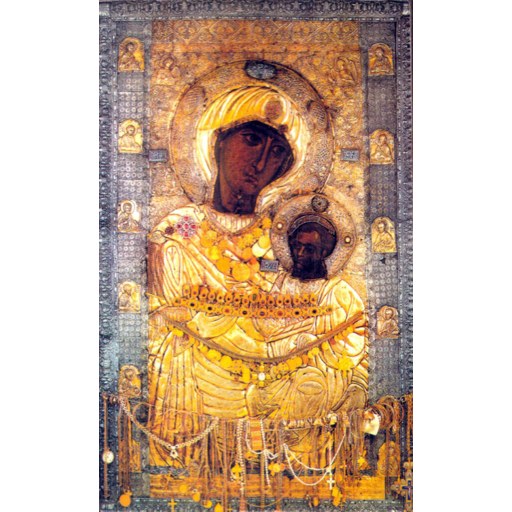
https://www.dailyartmagazine.com/10-marvellous-madonna-paintings/
License: unknown
Virgin Coletta
Saint- Life Span
- 1381 - 1447 (age 66)
- Feast Day
- 6 March
- Gender
- female
- Church
- Catholic
Places
Roles & Family
Religious Information
Patronage
women seeking to conceive;expectant mothers;sick children;infertility;against the death of children
Canonization
Biography
Nicolette Boellet, later known as Colette, was born in 1381 in the town of Corbie in Picardy, in the Kingdom of France. Her father, Robert Boellet, was a carpenter employed at the Benedictine abbey of Corbie, and her mother was Marguerite Moyon. The couple had long been childless and attributed their daughter's birth to the intercession of Saint Nicholas of Myra; they therefore named her Nicolette, of which Colette is a familiar diminutive. Early lives describe her as a child of unusual seriousness who preferred prayer and works of mercy to ordinary amusements.
After the death of her father in 1399 and of her mother in 1402, Colette gave away her modest inheritance and sought a religious vocation. She first lived among the Beguines and later served as a domestic in a Benedictine house, but found neither way of life sufficiently austere. She then received the habit of the Third Order of Saint Francis and, with the consent of the abbot of Corbie, was enclosed as a recluse in a cell attached to the abbey church. There she spent several years in fasting, silence, and contemplation. According to the early biographies, Saint Francis of Assisi appeared to her and charged her with restoring the Poor Clares to the original strictness of the Rule of Saint Clare.
In 1406 she left her hermitage and traveled to Nice, where Benedict XIII, the Avignon claimant to the papacy during the Western Schism, authorized her to reform existing Poor Clare monasteries and to found new houses of the primitive observance; he himself clothed her in the Poor Clare habit. She then undertook a long apostolate across France, Savoy, Burgundy, and Flanders, restoring convents to enclosure, poverty, and fasting and establishing new communities that followed her constitutions. These houses became known as the Colettine Poor Clares; traditional accounts credit her with some seventeen foundations. She also encouraged the Observant reform among Franciscan friars and urged recognition of the pope elected at the Council of Constance.
Colette was credited in her lifetime with healings, prophecy, and the conversion of sinners. In her last years she resided chiefly at the monastery she had established at Ghent in Flanders. She died there on 6 March 1447 and was buried in the convent church, which became a place of pilgrimage. Devotion to her spread among Franciscans and the laity of France and the Low Countries. She was beatified by Pope Clement XII in 1740 and canonized by Pope Pius VII on 24 May 1807. The Roman Martyrology commemorates her on 6 March. Because her own parents had waited many years for a child, and because she showed compassion toward the sick and the young, she has been invoked by those who desire children, by expectant mothers, and on behalf of sick children.