Virgin Demetria is a saint of the Catholic Church. Virgin Demetria's feast day is celebrated on 21 June.
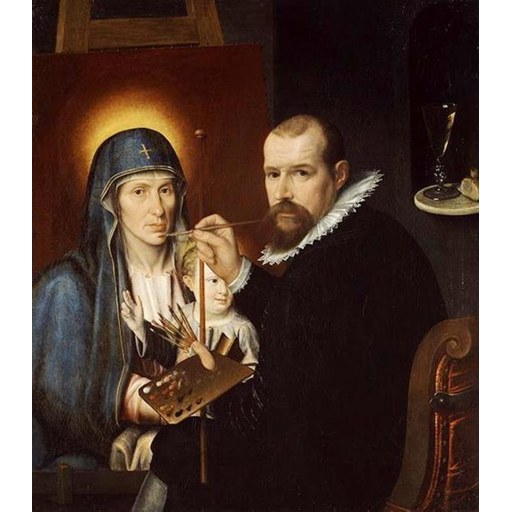
https://commons.wikimedia.org/wiki/Paintings_of_Saint_Luke_painting_the_Virgin
License: unknown
Virgin Demetria
Saint- Feast Day
- 21 June
- Gender
- female
- Church
- Catholic
Places
Roles & Family
Biography
Saint Demetria, often called Demetria of Rome or the virgin Demetria, is commemorated in the Roman Martyrology as a virgin who died after confessing the Christian faith in Rome. The only substantial narrative attached to her name is the legendary Latin passion of Saint Bibiana, a late and historically unreliable text that presents Demetria as the daughter of the Roman Christians Flavian and Dafrosa and as the sister of Bibiana. The story is set in the fourth century and associated with the brief reign of the emperor Julian (361–363), though no contemporary historian or martyrology independent of this cycle confirms the family’s existence or the details of their deaths. Modern hagiographers treat the Acts as a pious legend, probably composed to explain the origins of the church of Santa Bibiana on the Esquiline and to furnish patrons for that sanctuary.
In the traditional account, Flavian was arrested, tortured, and sent into exile, where he died of his wounds; Dafrosa was later beheaded. Their daughters remained in the family house, which was confiscated and placed under a woman named Rufina, who tried to draw them into apostasy. Brought before the prefect Apronianus, Demetria publicly confessed Christ and, according to the legend, expired at once in the prefect’s presence, so that her martyrdom is described as a sudden giving up of the spirit after confession rather than as death under prolonged torture. Bibiana was subsequently scourged to death. The Roman Martyrology records Demetria on 21 June with the notice that she was the daughter of the holy martyrs Flavian and Dafrosa and the sister of the virgin martyr Bibiana, and that she herself, having confessed Christ before Apronianus, yielded up her spirit. Bibiana is kept on 2 December.
A church dedicated to Saint Bibiana has stood in Rome from late antiquity and was identified in medieval tradition with the site of the family’s dwelling; it was restored in later centuries, notably in the seventeenth century. Demetria’s cult is therefore that of an early Roman virgin martyr known through liturgical commemoration and through association with her better-known sister, not through a securely documented biography. She is not recorded as a member of any later religious order, and no distinctive list of patronages—places, professions, or causes—is firmly attached to her name in the way some are attached to Bibiana.
Nothing can be verified about Demetria’s year of birth, the precise year of her death, or her burial apart from the legendary localization in Rome. No independent fourth-century source names her. She is honored as a virgin who died for the faith, and her commemoration on 21 June remains the principal historical fact that can be stated with confidence: that the Roman Church has long numbered her among its virgin martyrs of the city of Rome.