Virgin Georgia is a saint of the Catholic Church. Virgin Georgia's feast day is celebrated on 15 February.
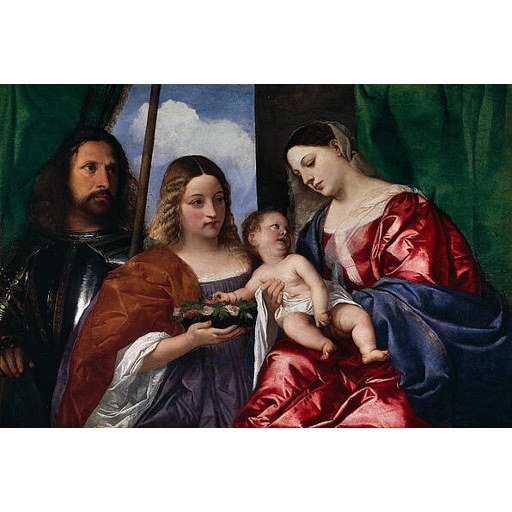
https://fineartamerica.com/art/paintings/st+george+school
License: unknown
Virgin Georgia
Saint- Feast Day
- 15 February
- Gender
- female
- Church
- Catholic
Places
Roles & Family
Biography
Saint Georgia (Latin Georgia; French Sainte Géorgie) was a consecrated virgin of Clermont in Auvergne, in late antique Gaul, remembered in the Western martyrological tradition simply as “Georgia, Virgin.” Virtually everything that can be said of her with any historical control derives from a short notice by Saint Gregory of Tours in his In Glory of the Confessors (Liber in gloria confessorum), composed in the later sixth century, together with the later liturgical entry that placed her on 15 February in local Auvergnat calendars and, in time, in the Roman Martyrology. Gregory presents her as a woman of the Clermont district who had dedicated her life to God. Later compilers, including Alban Butler, describe her as a native of Clermont who led a holy life in that city in the sixth century (some popular notices say the fifth). No contemporary vita, correspondence, or dated document survives, and neither her year of birth nor an exact year of death is recorded. The round date “about 500” that appears in many modern lists is conventional, not documentary.
What Gregory emphasizes is not a public career but the manner of her burial. After Georgia died, her body was carried in funeral procession toward the grave. A flock of doves appeared and accompanied the cortège, flying about the bier; one bird was said to have remained at the tomb. Gregory and subsequent readers took the doves as a sign of virginal purity and of divine attestation. The motif belongs to a wider late-antique hagiographical repertoire in which white birds mark the death or burial of holy virgins and confessors. Beyond this anecdote, the sources do not describe a monastic rule, a foundress’s work, or a martyrdom. Georgia is classed as a virgin, not a martyr: she is understood to have lived a consecrated, unmarried life of prayer and austerity in or near Clermont, without membership in any later named religious order, which did not yet exist in that form in fifth- and sixth-century Gaul.
Medieval and early modern tradition located her burial in the church of Saint Allyre (Saint Illidius) at Clermont and held that miracles occurred at her tomb, a claim already associated with Gregory’s testimony that her resting place was known and honored. Her cult remained essentially local to Auvergne. She was not the object of a formal papal canonization of the later medieval or modern type; recognition was of the pre-congregation kind, resting on episcopal and popular veneration and on Gregory’s authority, later ratified by inclusion in the martyrology. She is not recorded as having married or had children. No reliable list of patronages—of places, trades, illnesses, or causes—attaches to her name in the standard collections.
The limits of the dossier should be stated plainly. Georgia of Clermont is an obscure figure even by the standards of Merovingian hagiography. There is no evidence that she held ecclesiastical office, founded a community, or left writings. Confusion with Saint George the martyr, with Georgian (Kartvelian) saints, or with other virgins named Georgia or Giorgia should be avoided: the subject of the 15 February notice is the Auvergnat virgin commemorated by Gregory of Tours. What can be affirmed is modest: a consecrated woman of Clermont in Auvergne, living in the fifth or sixth century, whose memory was preserved because of the reported sign at her funeral and because her tomb was thereafter a local focus of devotion.