Virgin Irmina is a saint of the Catholic Church. Virgin Irmina's feast day is celebrated on 24 December.
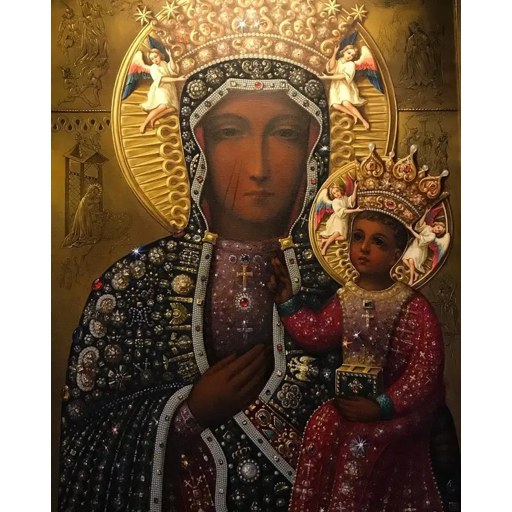
https://blog.ecclesiasticalsewing.com/2025/07/01/the-story-of-saint-luke-and-the-first-painting-of-the-virgin-mary/
License: unknown
Virgin Irmina
Saint- Feast Day
- 24 December
- Gender
- female
- Church
- Catholic
Places
Roles & Family
Religious Information
Biography
Irmina, commonly called Irmina of Oeren or Irmina of Trier and honoured in the calendar as a virgin, was a Frankish noblewoman of the later seventh century whose memory rests on a small body of contemporary charters and on a much later hagiographical tradition. Medieval legend made her a daughter of the Merovingian king Dagobert II and a sister of Saint Adela of Pfalzel. That royal genealogy is not supported by seventh- or eighth-century documents and is treated with reserve by modern historians. What the records do establish is that a woman named Irmina held extensive property in the Moselle country around Trier and used it to endow monastic life in Austrasia at the close of the seventh century.
According to the later lives, Irmina was betrothed to a nobleman who was killed before the marriage could be celebrated. She then took the veil as a consecrated virgin and received the estate of Oeren (Ören), on the site of a former Roman storehouse just outside Trier, where she founded a community of nuns and ruled it as abbess. Whether or not the betrothal story is historical, her name remained attached to that house, later known as St. Irminen, which became one of the principal women’s monasteries of Trier and was in time counted among the Benedictine abbeys of the region.
A historically secure act of her patronage is the grant of land at Echternach, in what is now Luxembourg, to the Northumbrian missionary Willibrord. By a charter of 697 or 698 she conveyed the estate so that a monastery might be founded there. Echternach grew into a major centre of the Anglo-Saxon mission on the Continent. The donation places Irmina among the aristocratic women who shaped the church of Austrasia in the generation of Pepin of Herstal.
She is traditionally said to have died on 24 December, a date often assigned to about 708, though surviving documents only show that she was still living in the late 690s and that her death fell sometime after 704. She was buried at her monastery in Trier. Her cult remained local; she is commemorated as a virgin and abbess, most commonly on 24 December, with some calendars noting her on other days in late December or early January. Twentieth-century genealogical studies have proposed identifying the foundress of Oeren with Irmina, wife of the seneschal Hugobert and mother of Plectrude and other children, which would contradict the title of virgin. That reconstruction is still debated. In liturgical and hagiographical tradition she continues to be venerated as Virgin Irmina, abbess of Oeren.