Virgin Maxima is a saint of the Catholic Church (d. 304). Virgin Maxima's feast day is celebrated on 2 September.
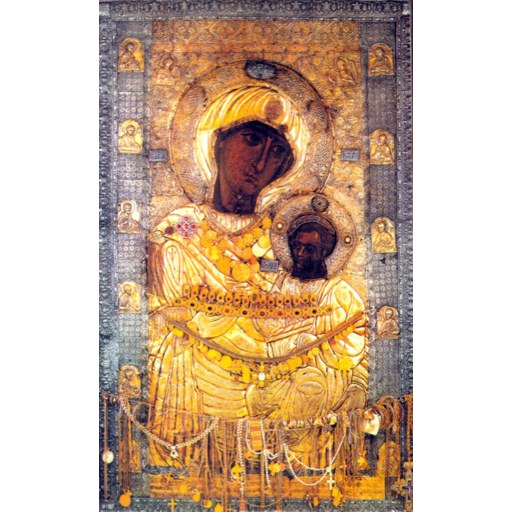
https://www.dailyartmagazine.com/10-marvellous-madonna-paintings/
License: unknown
Virgin Maxima
Saint- Life Span
- d. 304
- Feast Day
- 2 September
- Gender
- female
- Church
- Catholic
Places
Roles & Family
Biography
Saint Maxima, commemorated in the Roman Martyrology as a virgin who suffered at Rome, belongs to the generation of Christians who faced the Great Persecution under the emperors Diocletian and Maximian in the early fourth century. Traditional hagiography identifies her as the nurse of the young Roman noble Ansanus, later venerated as the apostle and patron of Siena. Living in a senatorial household that remained pagan, Maxima is said to have instructed the boy in the Christian faith and to have baptized him in secret, thereby forming him as a Christian from his earliest years. Nothing reliable is recorded of her own parentage, place of birth, or the circumstances that first brought her into that household.
When Ansanus reached about the age of nineteen, his father discovered his Christianity and delivered both his son and the nurse to the magistrates. This denunciation is placed by the legend in the time of Diocletian’s edicts against the Church, conventionally in 303–304. Maxima was arrested in Rome together with Ansanus. Under interrogation she confessed Christ. The surviving accounts state that she was beaten with rods and that she died of this scourging, thus completing her martyrdom in the city of Rome while Ansanus, who survived the same initial tortures, was later taken or fled to Tuscany, where he continued to preach until his own execution at Siena.
The written acts that narrate these events are of medieval composition and show the influence of later Sienese civic devotion to Ansanus; they cannot be treated as contemporary fourth-century documents. Critical hagiographers therefore regard the story as largely legendary in its details, even if it may preserve the memory of an authentic Roman martyr named Maxima and of a connection, real or constructed, with the Sienese saint. The Roman Martyrology nevertheless retained her commemoration on 2 September, noting that she confessed Christ together with blessed Ansanus in the persecution of Diocletian and, having been beaten with rods, passed to the Lord. She is honored as a virgin, a designation that in the ancient martyrological tradition indicates that she was remembered as unmarried and chaste.
Beyond this brief notice, the historical record is silent. No inscription, cemetery, or early itinerary independently attests her tomb. She did not become the object of a widespread cult or of well-documented patronages of places, trades, or causes. In later art she appears only occasionally, usually in the company of Ansanus or with the rods of her passion. Her memory survives primarily as that of an early Roman virgin martyr whose fidelity, according to the Church’s liturgical books, was sealed by a violent death in the first years of the fourth century.