Virgin Wivina is a saint of the Catholic Church (1103 - 1170). Virgin Wivina's feast day is celebrated on 17 December. Virgin Wivina is the patron saint of Groot-Bijgaarden.
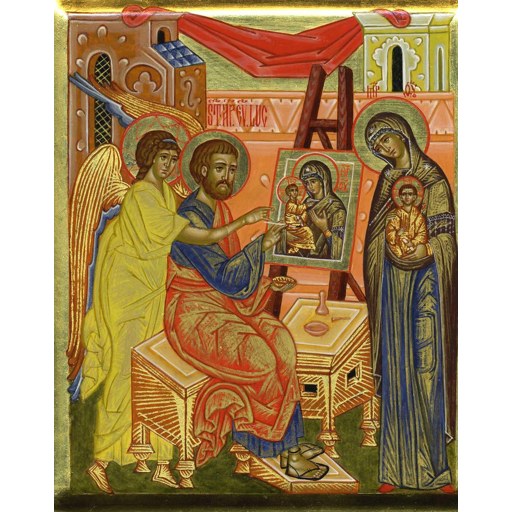
https://dailyartmagazine.com/saint-luke-the-ultimate-holy-painter
License: unknown
Virgin Wivina
Saint- Life Span
- 1103 - 1170 (age 67)
- Feast Day
- 17 December
- Gender
- female
- Church
- Catholic
Places
Roles & Family
Religious Information
Patronage
Groot-Bijgaarden
Biography
Saint Wivina (also rendered Wivine, Vivina, or Guivine) was a Benedictine nun and abbess of the twelfth century, remembered as the foundress of the Abbey of Grand-Bigard (in Dutch, Groot-Bijgaarden) on the western outskirts of Brussels. Traditional accounts place her birth in 1103 at Oisy, a lordship in the Cambrésis in what is now northern France, and describe her as belonging to a noble family. From youth she is said to have desired a consecrated life. When a marriage was proposed by a young nobleman, she declined it and resolved to live as a virgin dedicated to God rather than enter the married state expected of a woman of her rank.
In or about 1126 Wivina left her home and settled as a hermit in a forested tract that formed part of the domains of the counts of Louvain, dukes of Brabant. Count Godfrey I of Louvain, known as Godfrey the Bearded, granted her land at Grand-Bigard and supported the establishment of a community of women under the Rule of Saint Benedict. Wivina became the first abbess of the new monastery. The house developed into a notable Benedictine nunnery, drawing vocations from the regional nobility and maintaining close ties with the ducal court of Brabant. The foundation belongs to the wider twelfth-century expansion of Benedictine women’s houses in the Low Countries.
Hagiographical tradition portrays Wivina as an austere and charitable superior, given to prayer and to the instruction of her nuns. She is credited with organizing the monastic observance at Grand-Bigard and with exercising a spiritual influence that extended beyond the cloister. Documentary evidence from her own lifetime is sparse, as is typical for many female religious founders of the period; later medieval vitae and local chronicles supply most of the narrative details that have come down concerning her character and reported miracles. Historians therefore treat the more legendary episodes with caution while accepting her role as foundress-abbess as well established.
Wivina died at her abbey on 17 December 1170 and was buried there. A cult grew up at her tomb, and she has long been venerated as a saint in the Catholic Church, especially in Brabant and the southern Low Countries; her feast is kept on 17 December. She was not the subject of a surviving papal canonization bull of the later medieval type, and her cult rests on immemorial local veneration. The Abbey of Grand-Bigard continued as a Benedictine community until it was suppressed in the 1790s during the French Revolutionary secularizations; her relics were subsequently preserved in the locality. Because contemporary records are limited, the precise circumstances of her birth and early years remain dependent on later tradition, but her identity as the twelfth-century foundress of Grand-Bigard is a secure fact of Brabantine religious history.