Virgin is a saint of the Catholic Church.
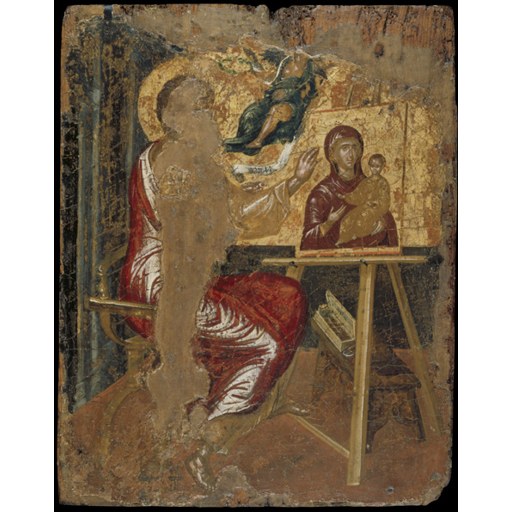
https://www.italianrenaissanceresources.com/units/unit-1/essays/saint-luke-paints-the-virgin-and-child-genealogy-of-an-image/
License: unknown
Virgin
Saint- Church
- Catholic
Biography
The subject given only as “Virgin” cannot be identified as a single historical person. In Christian hagiography the word is a title, not a personal name. It was applied to women believed to have remained unmarried and sexually continent, whether as consecrated virgins, nuns, or virgin-martyrs. Without a given name, a place of cult, a feast date, or another disambiguating detail, no unique life, dates, family, or burial can be verified, and none should be invented.
The figure most often called simply “the Virgin” in Christian usage is Mary, the mother of Jesus, also styled the Blessed Virgin Mary or, in Greek tradition, aeiparthenos (ever-virgin). The canonical Gospels place her in Nazareth of Galilee in the early first century and present her as betrothed or married to Joseph and as the mother of Jesus. They do not record her year of birth or death, her parents’ names (those appear only in later apocrypha such as the Protoevangelium of James), or a historically secure burial place. Later doctrine and liturgy—Annunciation, Nativity of Mary, Dormition or Assumption, Immaculate Conception—developed around her cult from late antiquity onward, but those are theological and liturgical facts, not a documented civil biography.
Apart from Mary, Latin, Greek, and Oriental martyrologies list a great many saints under the style “N., Virgin” or “N., Virgin and Martyr.” Well-known examples include Agnes of Rome, Lucy of Syracuse, Agatha of Sicily, Cecilia of Rome, and Catherine of Alexandria, together with numerous local or obscure virgins known only from brief calendar notices. Their legends typically belong to the third through fifth centuries or are medieval elaborations; many lack independently verifiable birth years, and several are of doubtful historicity. Treating “Virgin” as if it named one of them would be arbitrary.
Consecrated virginity as an ideal is attested among Christians from the second century (Ignatius of Antioch, Justin Martyr, and later the Apostolic Tradition and the writings of Ambrose, Jerome, and John Chrysostom). It became a formal ecclesiastical status and a standard hagiographic category. That institutional history explains why the title is ubiquitous; it does not supply a biography for an unnamed “Virgin.”
Because the subject cannot be matched to one verifiable individual, fields that require a specific life—years of birth and death, places, spouse, children, order, feast day, patronages, and acts of beatification or canonization—must remain empty. Any assignment of those data would be conjecture rather than history.