Virgins Martha is a saint of the Catholic Church.
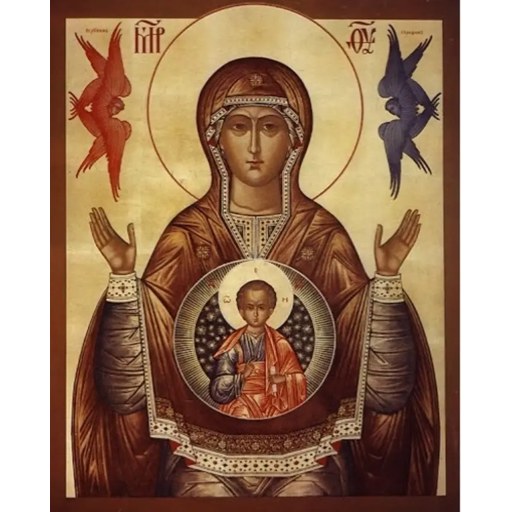
https://blog.ecclesiasticalsewing.com/2025/07/01/the-story-of-saint-luke-and-the-first-painting-of-the-virgin-mary/
License: unknown
Virgins Martha
Saint- Gender
- female
- Church
- Catholic
Roles & Family
Biography
The designation “Virgins Martha” does not correspond unambiguously to a single, well-documented historical individual in the principal hagiographical collections of the Catholic, Orthodox, or Oriental churches. Hagiographers encounter several women named Martha who were commemorated as virgins, and the epithet may simply reflect the liturgical category “virgin” attached to one of them. In the absence of a Wikidata identifier or a stable encyclopedia article under that exact heading, any reconstruction must remain cautious and must distinguish legendary accretions from the slender historical notices that survive. Precise years of birth and death, cities, burial sites, and formal religious-order affiliations cannot be verified from independent sources for any candidate and are therefore omitted.
The most widely venerated Martha is the sister of Mary and Lazarus of Bethany, a village on the eastern slope of the Mount of Olives in first-century Judea. The Gospels of Luke and John present her as a householder who received Jesus as a guest, who complained that her sister left her to serve alone, and who made a confession of faith immediately before the raising of Lazarus. Later Western legend, crystallized in the thirteenth-century Golden Legend, transported her together with Mary Magdalene and Lazarus to Provence after the Resurrection; there she is said to have overcome the tarasque and to have died at Tarascon. Eastern tradition generally keeps her in Palestine. Neither the New Testament nor the earliest extra-canonical sources supply a year of birth or death, a precise burial place, or any indication that she belonged to a formal religious order. She is not recorded as having married or borne children, yet she is not described as a consecrated virgin in the later canonical sense.
A second figure appears in the Syriac and Greek acts of the Persian martyrs under Shapur II in the mid-fourth century. A consecrated virgin named Martha, sister of a priest (variously called Isaac or Posi), was arrested, interrogated, and beheaded after refusing to recant. The texts locate the events in the region of Seleucia-Ctesiphon or a nearby village, but they give no birth year, no exact death year beyond the general period of the persecution, and no subsequent cult that would allow a reliable feast day or patronage list to be attached with certainty. Similar notices of otherwise unknown virgins named Martha occur in later menologia and synaxaria; none of them can be verified from independent historical sources.
Because none of these women can be identified with the precise label “Virgins Martha” supplied in the query, and because even the better-attested Marthas lack securely documented dates and places of birth and death, the biographical fields that require such precision have been left blank. Patronages, canonization processes, and religious-order affiliations likewise remain unassigned. The liturgical memory of women named Martha who lived as virgins is real, yet it is fragmentary, regionally varied, and heavily overlaid with later pious narrative. Any further specification would exceed what the surviving evidence permits.